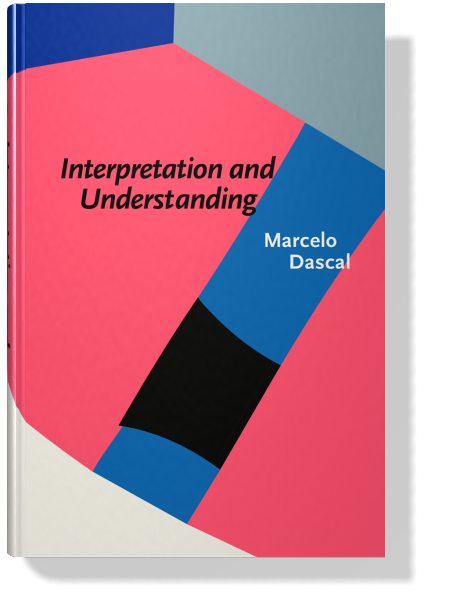
In:Interpretation and Understanding
Marcelo Dascal †
[Not in series 120] 2003
► pp. v–viii
Get fulltext
This article is available free of charge.
Published online: 31 October 2003
https://doi.org/10.1075/z.120.toc
https://doi.org/10.1075/z.120.toc
Table of contents
ForewordIx
Part I: Theorizing
1. Pragmatics and communicative intentions3
2. Conversational relevance31
3. Strategies of understanding52
4. Two modes of understanding82
5. Individual and collective intentions101
6. How does a connective work?115
7. Commitment and involvement149
8. Cues, clues, and context169
9. Models of interpretation194
Part II: Applying
10. Understanding digressions213
11. Understanding a metaphor244
12. Three remarks on pragmatics and literature273
13. Understanding controversies280
14. Understanding misunderstanding293
15. Understanding the law322
16. Understanding jokes and dreams362
17. Understanding art380
18. Why does language matter to Artificial Intelligence?402
19. Pragmatics in the digital age437
20. Interpretation and tolerance457
21. Understanding other cultures477
Part III: Meeting the alternatives
22. Why should I ask her?497
23. Speech act theory and pragmatics507
24. The pragmatic structure of conversation521
25. Contextualism542
26. Does pragmatics need semantics?562
27. Pragmatics and foundationalism594
28. The marriage of pragmatics and rhetoric600
29. Hermeneutic interpretation and pragmatic interpretation623
30. The limits of interpretation641
Sources and acknowledgments660
References666
Subject Index695
Name Index709
