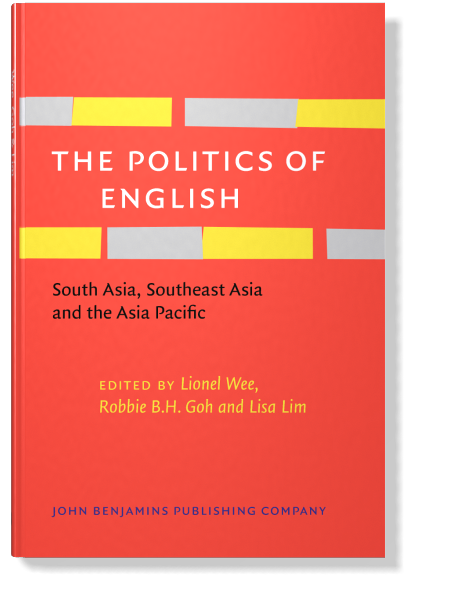
In:The Politics of English: South Asia, Southeast Asia and the Asia Pacific
Edited by Lionel Wee, Robbie B.H. Goh and Lisa Lim
[Studies in World Language Problems 4] 2013
► pp. 227–248
12. English vs. English conversation
Language teaching in modern Japan
Published online: 28 March 2013
https://doi.org/10.1075/wlp.4.16hir
https://doi.org/10.1075/wlp.4.16hir
From the mid-1800s, at the end of the Tokugawa feudal period and the beginning of the Meiji era, English has been a singularly important foreign language in Japan which has, since that time, risen to international prominence, mirroring the rise of the English speaking world powers in the west. While English education was limited to the elites at this time, after World War II English education became available to the general public through the newly-implemented public education system. Today, English is considered one of Japan’s most important school subjects, and English conversational skills are regarded as a highly desirable special talent. At the same time, most Japanese do not hide the difficulty they encounter with learning both written and spoken English. Even today Japan remains an essentially monolingual country and average person’s ability to utilize English in any practical capacity is quite limited. This paper discusses Japan’s idealization of native English speakers and the dilemma of learning how to speak like them while at the same time living in an isolated monolingual nation. The Japanese government struggles with appropriate strategies on English education curriculum, leaving considerable room for improvement in the education system. Without revising the current education plan, English will remain a weakness for Japan.

Cited by (8)
Cited by eight other publications
Sanchez, Becky & Shady Elkassas
Kamino, Kodai & Daniel Hooper
Hiramoto, Mie
Tankosić, Ana & Sender Dovchin
Ito, Rika
Matsuura, Hiroko, Sarah Rilling, Reiko Chiba, Eun-Young Julia Kim & Nur Rini
Furukawa, Gavin
This list is based on CrossRef data as of 24 november 2025. Please note that it may not be complete. Sources presented here have been supplied by the respective publishers. Any errors therein should be reported to them.