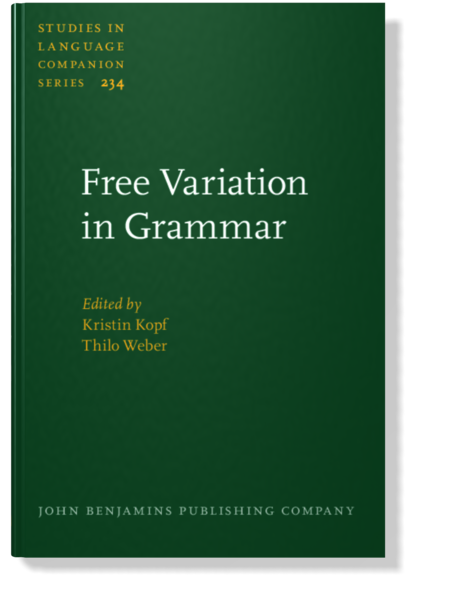
In:Free Variation in Grammar: Empirical and theoretical approaches
Edited by Kristin Kopf and Thilo Weber
[Studies in Language Companion Series 234] 2023
► pp. 351–352
Get fulltext
Index
Available under the Creative Commons Attribution (CC BY) 4.0 license.
For any use beyond this license, please contact the publisher at rights@benjamins.nl.
Published online: 31 October 2023
https://doi.org/10.1075/slcs.234.index
https://doi.org/10.1075/slcs.234.index
A
- absence of material 6, 10, 128, 140, 286, 293
- acceptability 9, 23, 25, 28–45, 51, 67, 76–77, 81–85, 90, 95, 101–102, 125, 137, 139–143, 151, 154, 212, 286, 318–320, 339
- age (of speaker) 51, 62, 188–194, 213, 263, 324–325, 331
- agreement 5, 65–67, 75–77, 84–85, 95–96, 119, 285, 287, 302
- allo-form 5, 13, 101–106, 205, 207, 230, 286, 318, 322, 326, 341
- ambiguity 77, 80, 109–110, 119, 121, 131, 135, 144, 154, 178, 308
- analogy 171, 195
- animacy 1, 22–24, 26–35, 37, 40–41, 44, 214–215, 217, 230, 233, 235–237, 240–241, 245–246, 286, 289–290, 294
B
- between-grammar approachsee variable output grammar
- bilingualism 4, 170, 195, 318
- blockingsee conditioned variation
- borrowingsee language contact
C
- cognition 5, 45, 105, 236, 246, 263, 265, 277–278
- competing grammars 4–5, 49, 65–68
- concordsee agreement
- conditionals 168–169, 171–175, 178, 183, 197–198, 230–233, 245–246
- conditioned variation 10, 13, 51–52, 59, 77–83, 95–96, 106, 150, 208–209, 211, 217, 219, 224–225, 229–230, 266, 284–285, 289, 294, 308, 340
- constraintsee influencing factor
- construction grammar 3, 5, 68, 104, 137
- corpus data 8–10, 28, 43–45, 85–87, 95–96, 140, 174–176, 203, 212–214, 236–237, 268
- countability 77, 79, 81, 295
- counterfactualsee conditionals
D
- diachronysee language change
- dialect 6, 53, 58, 62, 171–174, 186–187, 212, 267–269, 271, 318, 340
E
- ellipsissee omission
- English 4–7, 75, 230–232
- entrenchment 84, 264–265, 276–277
- equivalencesee functional equivalence
- experiment 28–43, 139–155, 194
F
- factorsee influencing factor
- free choicesee free variation
- free variation (definitions) 2, 6, 24, 49–50, 60–61, 83–84, 101–106, 169, 205–206, 225, 229–231, 260–261, 288, 316–317, 343
- free variation (stability) 13–14, 60, 65, 169, 194–197, 202–246
- free variation (transitional stage) 13, 65, 165, 194, 197–198, 204, 224, 246
- frequency 10, 25, 30, 35, 43–44, 85–91, 105, 112, 140, 177, 181–182, 184, 186, 188, 197–198, 203, 206–207, 222, 237, 242–246, 262, 265–271, 286, 294, 320, 331–334
- functional equivalence 2–5, 10, 23, 49, 60–61, 68, 83–84, 94–95, 102–104, 156, 169, 197, 204, 206–208, 225, 242, 288, 318
- functionalist linguistics 3, 5, 202
G
- generationsee age (of speaker)
- generative linguistics 3–5, 317
- genre 2, 85, 91–95, 150, 236
- German 2, 9, 13, 22–45, 53–54, 57, 61–67, 103, 107, 113, 117, 155, 204–225, 232
- Germanic 4, 13, 55, 61, 230–233
- grammaticalisation 112, 231, 235–236, 279
- grammaticality 5, 25, 29, 32, 35, 39, 44, 49, 51–52, 56, 60, 68, 298
H
- horror aequi 196, 230, 246
I
- idiolect 4, 49, 219, 264–265
- individual grammarsee idiolect
- influencing factor 1–2, 6–10, 13, 22, 24, 28, 30–31, 35–45, 49, 65, 69, 77–85, 91, 94–95, 140, 152, 169, 190, 197, 203, 207, 209, 214–219, 225, 230, 237–241, 262–263, 267–278, 284–285, 289–293, 307–308, 316, 320–325, 331, 337, 341–344
- interchangeabilitysee functional equivalence
- interferencesee language contact
- inter-individual variation 1, 9, 203, 316
- intra-individual variation 1, 49–51, 53, 58, 61, 65, 102, 105–106, 203, 219–221, 316
- isomorphism 3, 5–6
L
- L2 53, 170, 176, 195
- language change 13–14, 60, 66, 112, 194, 197, 266, 307
- language contact 53–56, 62, 170, 194–195, 307, 318–319, 334, 337, 339–340
- language processing 25, 35, 44–45, 263, 328
- lesser documented languages 7, 9, 170, 195, 203
M
- markedness 39, 51–54, 56–60, 69, 117, 124, 236, 246, 290–294, 319, 323, 331, 334, 337, 339, 341
- meaning 2–6, 10, 23–24, 50, 79–81, 83, 86, 101–112, 127–130, 170, 192–193, 231, 233–235, 245–246, 288–290, 296, 298, 300
- minimalism 5, 52, 317
- modal verb 15, 61–62, 181, 232–235, 318–320
N
- number 6, 74–96, 180–181, 205–206, 209–210, 224, 284–308
O
- omission 2, 39, 99–156, 321–322
- optimality theory 4, 5, 49, 68, 105, 316
P
- Pāṇini Principlesee Principle of No Synonymy
- performance 6, 50
- predictorsee influencing factor
- Principle of No Synonymy 5, 99–100, 109, 204, 206
- processingsee language processing
- productivity 112, 117, 128, 131, 151, 171, 275
- psycholinguistics 262, 265–266, 316
Q
- questionnaire 141, 162–163, 174–176, 326
R
- randomness 2, 6, 24, 26, 45, 217, 316
- rule 3, 5, 24, 52, 56–60, 68, 77, 83, 101–106, 109–123, 138, 151, 202–203, 316
S
- semanticssee meaning
- sociolinguistics 2–3, 6, 49–51, 62, 65, 202–203, 205, 268, 316, 323–326, 339–340
- Spanish 6, 99, 260–279, 286, 294, 307–308, 318–321, 324–327, 339–340
- speech community 175, 203, 207, 219, 221, 316
- stability of free variationsee free variation (stability)
- style 1–2, 6, 50, 62, 108, 139, 155, 230, 261, 267, 288, 294, 308
- surveysee questionnaire
- synonymsee functional equivalence
T
- transitional stagesee free variation (transitional stage)
U
- underspecification 5, 49, 110–111
- unexplained variation 2–3, 8, 204, 260–261, 277–278, 284, 287
V
- variable output grammar 5, 25, 49, 68
- variationist linguistics 8, 48–49, 203, 260–261
W
- within-grammar approachsee competing grammars
- word order 4, 5, 11, 22–45, 53–54, 59, 61–62, 156, 229–246
