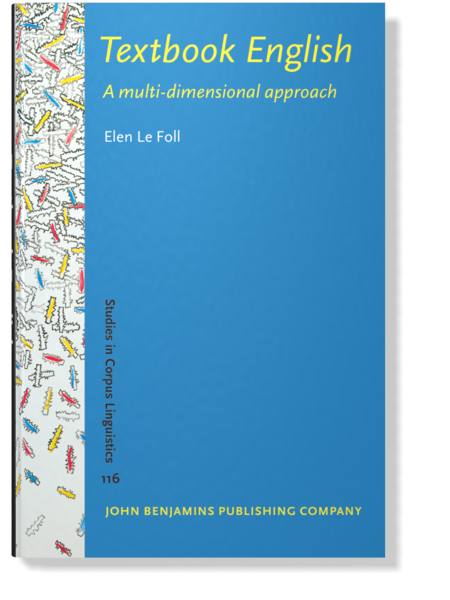
In:Textbook English: A multi-dimensional approach
Elen Le Foll
[Studies in Corpus Linguistics 116] 2024
► pp. 293–293
Index
Published online: 25 July 2024
https://doi.org/10.1075/scl.116.index
https://doi.org/10.1075/scl.116.index
A
- acceptability judgments58
- analysis of variance, ANOVA 134, 152
- annotation 69, 75–84, 112, 118–120, 243–248
- authentic texts/language 7–11, 36, 88, 209, 212–225, 231–233
- authenticity 7–11, 29–30, 40
B
- Biber tagger 115–116, 238
- British English 87–91
- British National Corpus 2014, BNC2014 51, 55, 86–87, 90–92, 119–121, 135, 209–210, 243
- British National Corpus 1994, BNC1994 29–30, 32–34, 45, 50–51, 55, 57, 63–64, 91, 92
C
- cognitive linguistics 11–12, 45–46
- collocation 12, 35, 45–46, 88–89, 211–212, 218, 220–222
- Common European Framework of Reference for Languages, CEFR 6, 19, 26
- construction grammar 11–14, 212
- Corpus of Contemporary American English, COCA 32, 88, 211–213, 219–222
- corpus-driven2
- cross-validation 139, 238–239
- curriculum 1, 7–8, 16–18, 232
D
- data-driven learning 22, 230, 236
- delexical constructions 48, 51
- disfluencies 184, 188, 200
E
- English as a foreign language, EFL5
- English as a Lingua Franca, ELF 6, 87–90
- English as a Second Language, ESL5
- English for Academic Purposes, EAP 23, 29–30, 51–52, 58, 80
- exploratory factor analysis, EFA 100, 112, 124–126, 129, 141f., 148, 240
F
- factor analysissee EFA and PCA
- features 114–124, appendix C
- finite verb phrase 123, 168–169
- France 6–7, 17–19, 71–75
G
- genre 78–79
- Germany 6–7, 15–19, 71–75
I
- input 2, 5, 9–21, 41–44, 65, 70, 86, 90, 226–227, 249
- International Standard Classification of Education, ISCED 6, 71
L
- learner corpus 24, 41–42, 45, 216, 235, 248–250
- lexical approach18
- lexical bundle 51–53, 212
- linguistic features 114–124, appendix C
- listening 7, 37, 39, 61, 214
M
- materials design 23, 220, 231, 233–236, 250
- mixed-effects modeling 134–135, 151–152, 171, 241, 247
- Multidimensional Analysis Tagger, MAT 108, 138, 238
- Movies corpus211
- Multi-Feature Tagger of English, MFTE 114–123, 138–139, 242, 244
- multiple correspondence analysis112
N
- n-gram115
- native speaker 5–6, 9, 14, 36, 40, 43, 62, 64–65, 87–89, 250
O
- Open Science 35, 68–69, 138, 241–242
- optical character recognition, OCR 73–75, 80, 94, 118
P
- Perl 116, 119, 138
- pedagogic corpus 55, 70
- phrasal verbs 32, 45, 50, 187, 190, 198
- phrasemes 51, 55, 249
- principal component analysis, PCA 125–126, 133, 139, 240–242, 247
- proficiency level 6, 50, 66–67, 77, 86, 109, 134, 146–149, 152, 156, 161–165, 175–176, 180–182, 192
- Python 77, 94, 138
R
- R 69, 126, 135, 241
- reference corpus/corpora 32–33, 38–39, 50, 60–63, 84–95, 243
- regression 134–136, 175–176, 247
- reliability 28–29, 34, 68, 81, 89, 119–123, 126, 244
- replicability 68–69, 108, 114, 124, 132, 138–139, 237–242
- representativeness 71–75, 86, 90–93, 97, 113, 127, 242, 249–251
- reproducibility 68–69, 138–139, 241–242, 248, appendices B–H
S
- Spain 17, 45, 71–74
- support verb constructions 48, 51
- syllabus 16–18, 23, 36, 48, 218, 249
T
- tagger 114–123, 138–139, 242, 244
- tasks 7–9, 15, 19, 25–28, 40, 46, 82, 110–111, 156, 226, 250
- teachers and teacher education 15–20, 59, 60, 70–75, 88–90, 196–197, 205, 209–212, 219–222, 227–233
- text type 63, 78–79, 205
- text units 112–114
- textbook market 19, 56, 72–73, 214
- TV language 210–214
U
- usage-based linguistics 11–14, 62, 65, 212, 219, 250
