In:Positioning the Self and Others: Linguistic perspectives
Edited by Kate Beeching, Chiara Ghezzi and Piera Molinelli
[Pragmatics & Beyond New Series 292] 2018
► pp. 285–305
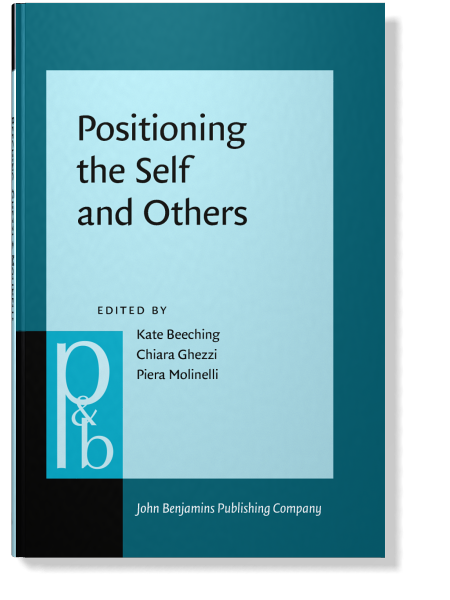
Chapter 13Positioning the self in talk about group
Linguistic means emphasising veracity used by members of the Georgian Greek community
Published online: 17 July 2018
https://doi.org/10.1075/pbns.292.13hof
https://doi.org/10.1075/pbns.292.13hof
Abstract
This paper focuses on the discourse marker chestno govorya ‘honestly speaking’ as a device allowing speakers to create greater closeness between interlocutors and then drawing sharp social boundaries in positioning their own community in relation to others. The study is based on an ethnographically informed conversation analysis of 49 semi-structured interviews with members of Georgia’s Greek community and elucidates the links between the nano level of interaction and larger societal discourses ranging from the communal to the (post-) Soviet imaginary. It is shown how chestno serves firstly as a disclaimer of potentially difficult topics ahead, of risky self-disclosure which fosters intimacy, enabling speakers to establish the recurring boundary between ‘Christians’ and ‘Muslims’ or rehearse stereotypes, established as a child. Methodologically, a corpus search for veracity devices, such as chestno govorya, can help identify sections of discourse where problematic issues relating to the way speakers position themselves in their community are being discussed.
Article outline
- 1.Introduction
- 2.Identification, boundaries, positioning, and veracity in discourse
- 3.Data
- 4.Emphasising veracity in the interview corpus
- 5.Conclusion
Acknowledgments Notes References

References (41)
Anderson, Benedict. 1991. Imagined Communities. Reflections on the Origin and Spread of Nationalism. London/New York: Verso, 2nd edn. First published 1983.
Arendt, Birte. 2011. “Laientheoretische Konzeptionen von ’Sprache’ und ’Dialekt’ am Beispiel des Niederdeutschen. Eine kontextsensitive Analyse von Spracheinstellungsäußerungen sowie ihre methodologische Fundierung.” Niederdeutsches Wort. Beiträge zur Niederdeutschen Philologie 51: 133–162.
Bamberg, Michael. 2010. “Who Am I? Narration and its Contribution to Self and Identity.” Theory and Psychology 21 (1): 1–22.
Barth, Fredrik. 1969. “Introduction.” In Ethnic Groups and Boundaries. The Social Organization of Cultural Difference, ed. by Fredrik Barth, 9–38. Oslo: Universitetsforlaget.
. 2000. “Boundaries and connections.” In Signifying Identities. Anthropological Perspectives on Boundaries and Contested Values, ed. by Anthony P. Cohen, 17–36. London: Routledge.
Brown, Penelope, and Stephen C. Levinson. 1987. Politeness: Some Universals in Language Usage. Cambridge: Cambridge University Press.
Brubaker, Rogers. 2002. “Ethnicity without groups.” Archives Européennes de Sociologie 43 (2): 163–189.
Bucholtz, Mary, and Kira Hall. 2005. “Identity and Interaction: A sociocultural linguistic approach.” Discourse Studies 7 (4–5): 585–614.
Dijk, Teun van. 1987. Communicating Racism. Ethnic Prejudice in Thought and Talk. Newbury Park: Sage.
Geostat. 2016. “2014 General Population Census.” Tech. rep., National Statistics Office of Georgia. URL [URL].
Green, Sarah. 2009. “Lines, Traces and Tidemarks: Reflections on Forms of Borderliness.” Working paper, EastBordNet COST Action IS0803.
Hall, Stuart. 1996. “Who Needs ‘Identity’?” In Questions of Cultural Identity, ed. by Stuart Hall, and Paul du Gay, 1–17. London: Sage.
Haselsberger, Beatrix. 2014. “Decoding Borders. Appreciating Border Impacts on Space and People.” Planning Theory and Practice 15 (4): 505–526.
Hausendorf, Heiko. 2000. Zugehörigkeit durch Sprache. Eine Linguistische Studie am Beispiel der Deutschen Wiedervereinigung. Tuebingen: Niemeyer.
Höfler, Concha Maria. 2011. Georgische Griechen – griechische Georgier? Zur Identität der Urum-Kommunikationsgemeinschaft Georgiens. Master’s thesis, Kulturwissenschaftliche Fakultaet, Europa-Universitaet Viadrina, Frankfurt (Oder).
. 2016. “Belonging beyond Language Boundaries – Language, Religion and Identity in the Multilingual Greek Community of Georgia.” STUF – Language Typology and Universals 69 (2): 213–234.
. 2018. “Language Competence “desirable” – Insights into Changing Attitudes towards Language Competence as a Feature of Belonging in Georgia’s Greek Community.” In Proceedings of the International Conference “The Politics and Poetics of Belonging”, (April 2015, Sfax, Tunisia), ed. by Mounir Guirat. Newcastle: Cambridge Scholars Publishing.
. forthcoming. Identifying as Greek and Belonging to Georgia: Processes of (Un)Making Boundaries in the Greek Community of Georgia. Baden-Baden: Nomos.
Jenkins, Richard. 1994. “Rethinking Ethnicity: Identity, Categorization and Power.” Ethnic and Racial Studies 17 (2): 197–223.
Koch, Peter, and Wulf Oesterreicher. 2011. Gesprochene Sprache in der Romania. Französisch, Italienisch, Spanisch. Berlin/New York: de Gruyter, 2nd edn.
Lamont, Michèle, and Virág Molnár. 2002. “The study of boundaries in the social sciences.” Annual Review of Sociology 28: 167–195.
Le Page, Robert B., and Andrée Tabouret-Keller. 1985. Acts of Identity. Creole-based Approaches to Language and Ethnicity. Cambridge: Cambridge University Press.
Mead, George Herbert. 1980. Geist, Identität und Gesellschaft. Frankfurt a. M.: Suhrkamp, 4th edn. First published 1934.
National Geospatial Intelligence Agency. 1949/2009. “Romanization Systems and Policies.” [URL]. Accessed on 30.12.2014.
National Statistics Office of Georgia. 2013. “Statistical Yearbook of Georgia.” Tech. rep., National Statistics Office of Georgia. [URL].
Pfaff-Czarnecka, Joanna. 2011. “From ’identity’ to ’belonging’ in Social Research: Plurality, Social Boundaries, and the Politics of the Self.” In Ethnicity, Citizenship and Belonging: Practices, Theory and Spatial Dimensions. Etnicidad, ciudadanía y pertenencia: prácticas, teoría y dimensiones espaciales, ed. by Sarah Albiez, Nelly Castro, Lara Jüssen, and Eva Youkhana, 199–219. Frankfurt a. M./Madrid: Iberoamericana Vervuert.
Rabinow, Paul. 1977. Reflections on Fieldwork in Morocco. Berkeley/Los Angeles: University of California Press.
Roth, Marita. 2005. Stereotype in Gesprochener Sprache. Narrative Interviews mit Ost- und Westberliner Sprechern 1993 – 1996. Tuebingen: Stauffenburg.
Sacks, Harvey. 1972. “An Initial Investigation of the Usability of Conversational Data for Doing Sociology.” In Studies in Social Interaction, ed. by David Sudnow, 31–74. New York: Free Press.
Schiffauer, Werner, Kerstin Schoor, and Jochen Koch. 2014. “Durabilität – Permeabilität – Liminalität. Ausschnitt aus dem EUV-Clusterantrag B/ORDERS IN MOTION.” Europa-Universität Viadrina.
Schmidt, Thomas, and Kai Wörner. 2009. “EXMARaLDA – Creating, Analysing and Sharing Spoken Language Corpora for Pragmatic Research.” Pragmatics 19 (4): 565–582.
Selting, Margret, Peter Auer, Dagmar Barth-Weingarten, Jörg Bergmann, Pia Bergmann, Karin Birkner, Elizabeth Couper-Kuhlen, Arnulf Deppermann, Peter Gilles, Susanne Günthner, Martin Hartung, Friederike Kern, Christine Merzlufft, Christian Meyer, Miriam Morek, Frank Oberzaucher, Jörg Peters, Uta Quasthoff, Wilfried Schütte, Anja Stukenbrock, and Susanne Uhmann. 2009. “Gesprächsanalytisches Transkriptionssystem 2 (GAT 2).” Gesprächsforschung – Online-Zeitschrift zur verbalen Interaktion 10: 353–402.
Sideri, Eleni. 2006. The Greeks of the Former Soviet Republic of Georgia. Memories and Practices of Diaspora. Ph.D. thesis, School of Oriental and African Studies, University of London.
Skopeteas, Stavros. 2014. “Caucasian Urums and Urum language.” Journal of Endangered Turkish Languages 3 (1): 333–364.
Stoltenburg, Benjamin. 2009. “Was wir sagen, wenn wir es “ehrlich” sagen … Äußerungskommentierende Formeln bei Stellungnahmen am Beispiel von “ehrlich gesagt”.” In Grammatik im Gespräch: Konstruktionen der Selbst- und Fremdpositionierung, ed. by Susanne Günthner, and Jörg Bücker, 249–280. Berlin/New York: de Gruyter.
Tabouret-Keller, Andrée. 1997. “Language and Identity.” In The Handbook of Sociolinguistics, ed. by Florian Coulmas, 315–326. Oxford: Blackwell.
Tilly, Charles. 2004. “Social Boundary Mechanisms.” Philosophy of the Social Sciences 34 (2): 211–236.
Wheatley, Jonathan. 2006. “Defusing Conflict in Tsalka District of Georgia: Migration, International Intervention and the Role of the State.” Tech. Rep. 36, European Centre for Minority Issues.