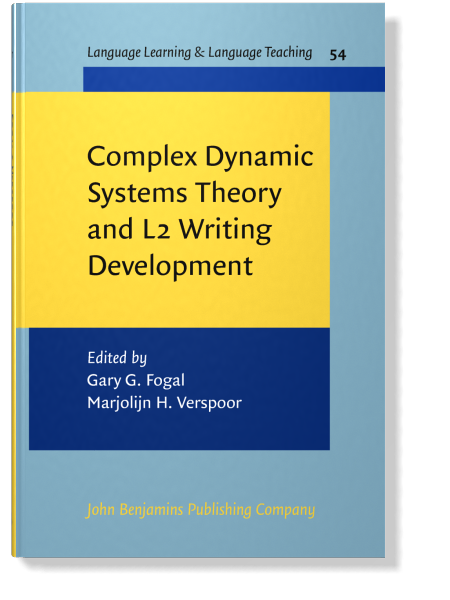
In:Complex Dynamic Systems Theory and L2 Writing Development
Edited by Gary G. Fogal and Marjolijn H. Verspoor
[Language Learning & Language Teaching 54] 2020
► pp. 133–158
Chapter 6Biographical retrodiction for investigating the evolution of learner
agency and L2 writing development through study abroad experiences
Published online: 4 June 2020
https://doi.org/10.1075/lllt.54.06nit
https://doi.org/10.1075/lllt.54.06nit
Abstract
This chapter explores the complex and dynamic
interrelations between L2 writing development and the evolution of learner
agency by using biographical retrodiction. A series of
in-depth interviews was conducted with two expert learners before and after
a study abroad period and narratives of their English learner experiences
were constructed. The findings suggest that both expert learners changed
their attitudes towards L2 writing according to the progress of their
overall L2 proficiency and that learner agency recurrently emerged in the
classroom and study-abroad contexts. The findings also emphasize the
usefulness of biographical retrodiction for analyzing accounts constructed
from learners’ narratives and contribute to understanding how various
components within learners’ agentic systems interact to complement L2
writing development.
Keywords: learner agency, retrodiction, study abroad, L2 writing
Article outline
- Introduction
- Understanding learner agency from a CDST perspective
- Biographical retrodiction for researching learner agency
- Effects of study abroad experiences on learner agency
- Method
- Context and research participants
- Research procedure and analysis
- Findings
- Changes in L2 writing
- Narrative analysis
- Jun’s narrative
- English learning history prior to SA
- English learning experience in a SA context
- Effects of a SA experience on learner agency
- Yu’s narrative
- English learning history prior to SA
- English learning experience in a SA context
- Effects of a SA experience on learner agency
- Jun’s narrative
- Discussion
- Development of L2 proficiency and writing through SA experiences
- Uniqueness and patterns in individual agentic systems
- Evolution of learner agency
- Conclusion
References Appendix

References (27)
Baba, K., & Nitta, R. (2014). Phase transitions in the development of writing fluency
from a complex dynamic systems perspective. Language Learning 64(1), 1–35.
Bell, J. S. (2002). Narrative inquiry: More than just telling
stories. TESOL Quarterly 36(2), 207–212.
Benson, P. (2005). (Autobiography) and learner diversity. In P. Benson & D. Nunan (Eds.), Learners’ stories: Difference and diversity in language
learning (pp. 2–21). Cambridge: Cambridge University Press.
(2011). Language learning careers as an object of narrative
research in TESOL. TESOL Quarterly 45(3), 545–553.
(2013). Narrative writing as method: Second language identity
development in study abroad. In G. Barkhuizen (Ed.), Narrative research in applied linguistics (pp. 244–263). Cambridge: Cambridge University Press.
Benson, P., Barkhuizen, G., Bodycott, P., & Brown, J. (2013). Second language identity in narratives of study abroad. Houndmills: Palgrave Macmillan.
Biesta, G., & Tedder, M. (2007). Agency and learning in the life course: Towards an
ecological perspective. Studies in the Education of Adults, 39(2), 132–149.
Bronfenbrenner, U. (1979). The ecology of human development: Experiments by nature and
design. Cambridge, MA: Harvard University Press.
Chan, L., Dörnyei, Z., & Henry, A. (2015). Learner archetypes and signature dynamics in the language
classroom: A retrodictive qualitative modelling approach to studying
L2 motivation. In Z. Dörnyei, P. D. Macintyre, & A. Henry (Eds) Motivational dynamics in language learning (pp. 238–259). Bristol: Multilingual Matters.
Dörnyei, Z., & Ryan, S. (2015). The psychology of the language learner revisited. London: Routledge.
Emirbayer, M., & Mische, A. (1998). What is agency? American Journal of Sociology, 103(4), 962–1023.
Johnson, K. (Ed.) (2005). Expertise in second language learning and teaching. London: Palgrave Macmillan.
Josselson, R. (2007). Narrative research and the challenge of accumulating
knowledge. In M. Bamberg (Ed.), Narrative: State of the art (pp. 7–15). Amsterdam: John Benjamins.
Larsen-Freeman, D. (2019). On learner agency: A complex dynamic systems theory
perspective. Modern Language Journal, 103(s1), 61–79.
(2015). The contexts within me: L2 self as a complex dynamic
system. In J. King (Ed.), The Dynamic interplay between context and the language
learner (pp. 11–28). Houndmills: Palgrave Macmillan.
Nitta, R., & Baba, K. (2018). Understanding benefits of repetition from a complex
dynamic systems perspective: The case of a writing
task. In M. Bygate (Ed.), Language learning through task repetition (pp. 279–309). Amsterdam: John Benjamins.
Nitta, R., & Nakata, Y. (in press). Understanding complexity in language classrooms: A
retrodictive approach to researching class climate. In R. J. Sampson & R. S. Pinner (Eds.), Complexity perspectives on researching learner and teacher
psychology. Bristol: Multilingual Matters.
Poupore, G. (2018). A complex systems investigation of group work dynamics in
L2 interactive tasks. The Modern Language Journal 102(2), 350–370.
van Lier, L. (2008). Agency in the classroom. In J. P. Lantolf & M. E. Poehner (Eds.), Sociocultural theory and the teaching of second
languages (pp. 164–186). London: Equinox.
Cited by (3)
Cited by three other publications
Baba, Kyoko & Ryo Nitta
2025. Two stories on applying novel methods. In Research Methods in CDST Approaches to SLD [Research Methods in Applied Linguistics, 14], ► pp. 57 ff.
蔡, 旺鑫
This list is based on CrossRef data as of 26 november 2025. Please note that it may not be complete. Sources presented here have been supplied by the respective publishers. Any errors therein should be reported to them.