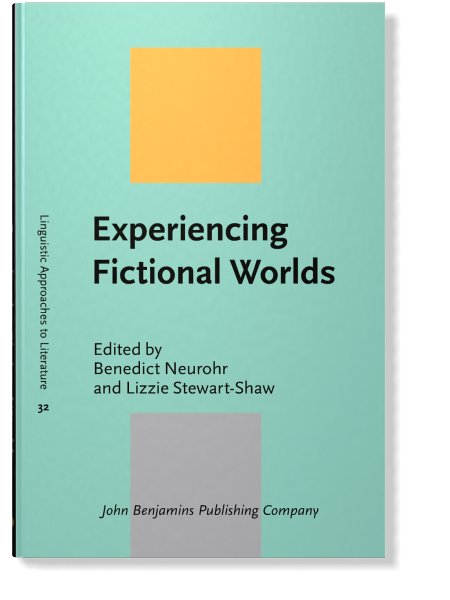
In:Experiencing Fictional Worlds:
Edited by Benedict Neurohr and Lizzie Stewart-Shaw
[Linguistic Approaches to Literature 32] 2019
► pp. 225–228
Index
Published online: 21 February 2019
https://doi.org/10.1075/lal.32.index
https://doi.org/10.1075/lal.32.index
A
- access to text-worlds 208-209, 213-215
- additional commentary 202-203
- additional talk202,
205-207,
210-211see also additional commentary
- extended discussion203, 211
- question and answer203
- aesthetic distance from the norm77, 79, 80, 162
- agency16, 19, 28, 29, 77, 138
- alienation128, 158, 164-165
- ambience77, 83-84, 87-88, 143
- ambivalence99, 103-104, 106, 113
- anti-mimetic narrative 160-161
- atmosphere61, 77-78, 83, 143-145, 151
- Atwood, Margaret 135-152
- attention18, 20, 21, 25, 27, 28, 76-80; , 83-93; , 149, 150, 167-168; see also manipulation of
- attention and resonance model 76-77, 93
B
- backward connections35, 40
- background knowledge38, 42, 50, 54-55, 101, 184
- bi-directional mapping 67-68
- Bildungsroman 105
- blended space 110-111
- boulomaic modal-world5, 166-167
- brain 34-38; , 40see also predictive
- Brandon Sanderson38, 49
- Bridget Jones’s Diary 119-132
C
- Canadian Literature53
- categorical mismatch/category jamming 79-80, 91
- Chamisso, Adelbert von 97-114
- character4, 20,
21-22, 25, 27, 28, 29, 40, 51, 56, 66, 68,
81-82, 84, 86, 106,
109-110, 113, 120, 123, 132, 136,
139-140, 144, 145, 148, 157, 159,
160-161, 168, 162, 163, 168, 170see also comic protagonist/ comic hero
- everyman/everywoman124, 130
- likeability124, 125-127
- physical appearance of124, 132
- the joker125
- characterisation64, 119-122, 123, 125, 127
- Clarke, Gillian178, 181-195
- co-construction of meaning184, 188, 194-195
- cognitive estrangement158, 159, 162, 164, 166, 167, 173
- cognitive feedback loop53, 54, 57-69
- cognitive frame99
- Cognitive Grammar43, 135-154, 220
- cognitive poetics1, 5-6, 18, 20-21, 199-200
- cognitive stylistics119, 136, 137, 142, 151
- “Cold Knap Lake”178, 181-195
- collaborative response186, 193, 194-195
- comic protagonist/ comic hero123, 127
- common ground (CG) 54-55, 57, 68
- comprehension aids205
- conceptual movement5, 75-76, 81-83, 93
- construal137, 149, 151see also subjective
- objective 139-140
- reconstrual137, 146, 151
- counterfactual2, 33, 40, 42, 45
- cringe comedy120, 127-131
- cued elicitation183
- cumulative talk188
- Currie, Sheldon 53-69
D
- “Dead Fish” 157-175
- defamiliarisation145, 158
- deictic braid 21-22, 25
- deictic centreSee deixis/deictic
- deictic projection107, 111, 166see also deixis/deictic
- deictic shiftSee deixis/deictic
- deixis/deictic4, 21, 42, 53,
81-82,
89-91, 105, 145, 150, 184, 207, 208, 214see also braid
- centre91, 108, 110-112, 164-165
- doubly deictic you 163-164, 172
- manipulation of24
- projection107, 111, 166
- shift22, 24, 26, 29, 41
- deontic modal-worldSee modal-world
- direct perception 213-215
- disassociation166, 172
- discourse-world4, 25, 28,
29-30,
53-57, 63,
68-69, 164, 184, 185, 189,
194-195,
203-205, 208,
213-126see also double reader
- knowledge40, 162
- participants185, 194-195
- split4, 104, 195, 203-205, 215
- discourse-world knowledgeSee discourse-world; see knowledge
- discourse-world participantsSee discourse-world
- disputational talk188
- divergent resourcing 193-194
- domains 137-139
- dominion79, 138-139, 144-147
- double reader discourse-world 204-205
- doubly deictic youSee deixis/deictic
E
- edgework 86-88
- embarrassment120, 127-131
- embodiment4, 5-6, 19, 137, 219
- emergence20, 21-30
- emotion1, 17, 19, 23-25; , 27-30; , 58, 59, 75-95; , 127-128; , 129, 131see also emotional responses/engagement
- emotional responses/engagement 23-25, 131, 158-159, 165, 169-173
- empathetic recognisability138, 148, 162
- empathy119, 120, 129, 132, 179see also role-taking
- empty text-world41, 48, 51
- enactor4, 66-69, 160, 163, 166, 209-211, 213
- epistemic modal-worldSee modal-world
- error35, 43
- ethnography 200-202
- everyman/everywomanSee character
- experiential knowledgeSee knowledge
- experientiality 5-6
- exploratory talk188, 193, 194
- extended discussionSee additional talk
- extratextual world99, 100, 103, 109, 113-114
F
- factuality103
- fantastic literature97, 103, 110-111, 113
- feedback54,
57-60see also positive
- negative 57-60
- felt absence 78-79, 85, 87-88
- fictionality 17-19, 97-99, 103, 113-114
- fictional worlds 1-12
- fictive publisher 103-114
- Fielding, Helen 119-132
- figure and ground 77-78, 91, 138
- flow16, 18-20
- focusing 137-138, 145
- foregrounding136, 144-145, 148, 152, 178, 189, 209-210, 211, 213
- foreshadowing 83-87, 89, 146, 151
- forward connections35, 40
- frame/framing57,
97-114, 137see also cognitive
- knowledge37, 57, 98
- paratextual98, 103-105
- textual101
- re-framing108
- frame knowledgeSee frame/framingknowledge
- function-advancing 4-5, 63, 77, 157-158, 167-168, 184
H
- hierarchy34, 35, 41
- High Fidelity 119-132
- Hornby, Nick 119-132
- horror fiction 75-95
I
- identification17, 56, 123, 132, 159, 164, 166, 171-173
- immersion 15-30, 82, 91, 103, 158, 164-165, 172-173, 220
- implied narratee163
- incrementation37, 47, 49, 78-79, 205, 212
- inherent negation 78-79, 85-88
- interactive interpretation203, 205-216
- inter-textual reference point chain144
- interthinking 188-189
- intra-textual reference point chain146
- intratextual world100, 105, 109, 113-114
- IT 80-95
K
- King, Stephen 80-95
- knowledge4, 76, 86, 53,
54-57,
68-69see also background
- base4, 54, 55, 69, 76, 86
- discourse-world40, 162
- experiential195, 201, 204, 210, 216
- frame37, 57, 98
- schematic21, 25, 138, 140, 144, 145
- structures37, 57, 60, 137
- knowledge baseSee knowledge
- knowledge structuresSee knowledge
L
- lexico-grammar75, 78, 92
- likeabilitySee character
- literature classroom context 179-180, 191
M
- manipulation of attention21, 80, 83-93, 86-93
- manipulation of deixisSee deixis/deictic
- Marek, Adam 157-175
- material action processes164, 166
- metonymic chaining64
- metonymy54, 62-63
- mind-casting 21-27
- mind-modelling22, 25, 57
- modalisation/modality5, 21, 22, 53, 91-92, 145, 184, 186
- modal-world5, 21, 22, 53, 85,
88-93, 150, 184,
186-188, 194see also boulomaic
- deontic5, 61, 169
- epistemic5, 39, 42, 43, 50, 89-91, 168, 186
- Monster Zoo 206-216
- morphological negationSee negation
- multimodal/multimodality16, 129, 189-190, 201
N
- narrative schemaSee schema
- narrative urgency89, 168
- negated text-world 78-79, 88, 169, 186, 193
- negation
77-80,
91-93, 186see also inherent
- morphological77, 79, 87-88
- syntactic79, 87-88
- negative feedbackSee feedback
- negatively oriented lexis 77-80, 83, 85-88
- negotiation99, 104, 140, 208, 215
- Nesbit, Edith 23-30
- NVivo202
O
- objectiveSee construal
- ontology5, 19, 42, 97, 106, 113-114, 160-162, 164, 172, 214-215
P
- paratext 99-100
- paratextual frameSee frame/framing
- participation-world 85-86, 89
- personal growth model of teaching179
- perspective-taking projectionSee projection
- Peter Schlemihls wundersame Geschichte 97-114
- physical appearance ofSee character
- picture-book 200-201, 205, 210, 213
- positive feedback 57-60
- possible worlds 2-3, 102, 106, 219
- pre-adult reading experience/ pre-school reading experience 199-216
- prediction34
- predictive brain56, 59
- Predictive Coding 34-38, 51
- predictive model35, 42, 48, 49
- pre-figuring178, 183
- pre-literate child200
- principle of minimal departure3, 102, 110, 111, 144
- priors36
- projection
110-113, 165, 171see also deictic
- perspective-taking165, 166
- psychological164
- prolepsis83
- prominence 138-140, 148
- proposition 54-55, 57
- prototypes 121-122
- psychological projectionSee projection
Q
- question and answerSee additional talk
R
- read-aloud situation 200-201
- readerly positioning53, 69, 100, 164-166, 172
- reader response18, 136, 151, 159, 162-172, 201
- reading-group discourse165, 172
- real readers69, 178, 200, 205
- reconstrualSee construal
- refamiliarisation 145-146, 149, 151-152
- re-framingSee frame/framing
- re-reading83, 97, 108, 135-152
- resonance 27-30, 76-77
- role-taking 129-130
S
- scaffolding role 211-212
- schema
21-27, 59, 79, 101,
121-122, 137, 138,
144-145, 164, 180see also accretion
- narrative180, 183
- refreshment60
- reinforcement60
- theory60
- schema accretion180, 183
- schema refreshmentSee schema
- schema reinforcementSee schema
- schema theorySee schema
- schematic knowledgeSee knowledge
- self-deprecating humour120, 127, 132
- self-effacement19, 22
- shared reading200, 216
- social categories121, 123
- specificity 137-138, 145
- split discourse-worldSee discourse-world
- storytime199, 200-201, 202, 203-212
- storyworld 98-100, 102, 104-106, 113, 219
- subjective construal140, 145
- superiority theory of humour120, 122, 123, 132
- syntactic negationSee negation
T
- text-drivenness4, 37, 51, 76, 162
- text-producer 203-204, 208
- text-receiver 203-204, 208
- textual attractor 76-77, 79-80, 86, 88, 91, 162
- textual frameSee frame/framing
- textual you 163-164
- texture20, 21, 27-28, 75-76, 81, 83, 86, 91-92, 147
- text-world (Adult) 207-208
- text-world (Child) 207-208
- “The Freeze-Dried Groom” 135-152
- The Glace Bay Miners’ Museum 53-69
- the jokerSee character
- The Railway Children 23-30
- The Wonderful History of Peter Schlemihl 97-114; see also Peter Schlemihls wundersame Geschichte
- tone 77-78, 143-144, 145, 147, 150, 151
- transportation6, 17, 102, 165
U
- unnatural mind161, 166
- unnatural mind-style162, 164
- unnatural narrative/narratology158, 161, 172
- unnatural narrator/narrative voice158, 160-161, 166, 169, 172-173
W
- Words of Radiance 38, 49
- world-building 4-5, 7, 19, 37-38, 42, 53-69, 77, 86-89, 157-158, 172, 184, 193, 205, 213-215, 219
- world repair48, 83, 145, 151
- world-switch5, 22, 37-38, 49, 51, 81, 88-93, 147-151, 164, 168, 184, 187, 194
Z
- zone of proximal development 211-212
