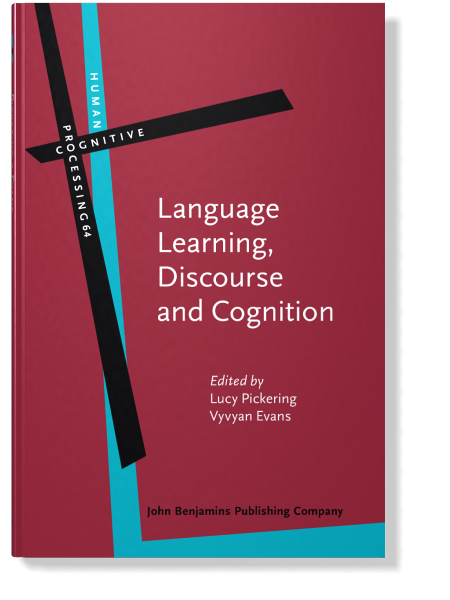
In:Language Learning, Discourse and Cognition: Studies in the tradition of Andrea Tyler
Edited by Lucy Pickering and Vyvyan Evans
[Human Cognitive Processing 64] 2018
► pp. 11–36
Chapter 1Culture, gender, ethnicity, identity in discourse
Exploring cross-cultural communicative competence in American university contexts
Published online: 20 December 2018
https://doi.org/10.1075/hcp.64.02dav
https://doi.org/10.1075/hcp.64.02dav
Abstract
International teaching assistants in charge of undergraduate classes in American universities present the anomalous situation of the non-native speaker in the role of higher authority, but the native-speaker having greater communicative resources and cultural knowledge. This interactional sociolinguistic case study of a facilitated negotiation of discourse style in conversations between a Chinese teaching assistant and an African-American undergraduate explores the situated enactment and interpretation of identity in relation to culture, gender, and ethnicity. A multilayered analysis involves videotaped role-plays based on a prototypical teacher/student interaction with conflicting goals, guided feedback, repeat enactments, playback sessions, and reverse role-plays. It explores the situated presentation of self and the attempt to exercise power, and reveals difficulties in the development of cross-cultural communicative competence when a discourse style is associated with values incompatible with presentation of self and thus emotionally unacceptable (in this case, to the African-American undergraduate).
Article outline
- 1.Introduction
- 2.Methodology and data
- 3.The first role-play
- 3.1The first enactment of the first role-play
- 3.2Guided feedback on the first enactment
- 3.3The second enactment of the first role-play
- 3.4Immediate guided feedback after second enactment of first role-play
- 3.5Discussion of the first role-play
- 4.The second role-play
- 4.1Discussion of the second role-play
- 5.The reverse role-plays
- 5.1Reverse role-play with Chinese TA playing role of student
- 5.2Immediate feedback on reverse role-play with Chinese ITA playing role of student
- 5.3Reverse role-play with American student playing Chinese student role
- 5.4Immediate feedback on reverse role-play with American student playing Chinese student role
- 6.Conclusions
Acknowledgements References

References (22)
Bremer, K. & Roberts, C. (Eds). (1996). Achieving understanding: Discourse in intercultural encounters. New York: Longman.
Canale, M. & Swain, M. (1980). Theoretical issues of communicative approaches to second language teaching and testing. Applied Linguistics, 1(1), 1–47.
Celce-Murcia, M. (1995). The elaboration of sociolinguistic competence: Implications for teacher education. In J. Atlatis, C. Straehle, B. Gallenberger & M. Ronkin (Eds.), Linguistics and the education of second language teachers: Ethnolinguistic, psycholinguistic, and sociolinguistic aspects: Georgetown University Roundtable on Language and Linguistics (pp. 699–710). Washington, DC: Georgetown University Press.
Davies, C. E. (2004). Developing awareness of cross-cultural pragmatics: The case of American/German sociable interaction. Multilingua: Journal of Cross-Cultural and Multilingual Communication, 23(2), 207–231.
Davies, C. E., & A. Tyler. (1994). Demystifying cross-cultural (mis)communication: Improving performance through balanced feedback in a situated context. In C. Madden & C. Myers (Eds.), Discourse and performance of international teaching assistants (pp. 201–220). Alexandria, VA: TESOL.
Davies, C. E., & Tyler, A. (2005). Discourse strategies in the context of cross-cultural institutional talk: Uncovering interlanguage pragmatics in the university classroom. In Bardovi-Harlig, K. & Hartford, B. S. (Eds.), Interlanguage pragmatics: Exploring institutional talk (pp. 133–156). Mahwah, NJ: Erlbaum.
Davies, C. E., Tyler, A., & Koran, J. (1989). Face-to-face with English Speakers: An advanced training class for international teaching assistants. English for Specific Purposes, 8, 139–153.
Gass, S. M., & Mackey, A. (2015). Stimulated recall methodology in second language research (2nd Edition). New York: Routledge
Gumperz, J. J., & Roberts, C. (1980). Developing awareness skills for inter-ethnic communication (Occasional Paper No. 12). Singapore: SEAMEO Regional Language Centre.
Hymes, D. (1972). On communicative competence. In J. B. Pride & J. Holmes (Eds.), Sociolinguistics: Selected readings (pp. 269–93). Baltimore: Penguin.
Scollon, R. & Scollon, S. (1991). Topic confusion in English-Asian discourse. World Englishes, 10 (2), 113–125.
Shaw, P., & Bailey, K. (1990). Cultural differences in academic settings. In R. Scarcella, E. Anderson, & S. Krashen (Eds.), Developing communicative competence in a second language (pp. 317–328). New York: Newbury House.
Tannen, D. (1984). Conversational style: Analyzing talk among friends. New York: Oxford University Press.
Thomas, J. (1984). Cross-cultural discourse as ‘unequal encounter’: Towards a pragmatic analysis. Applied Linguistics, 5(3), 226–235.
Tyler, A. (1994). Effective role-play situations and focused feedback: A case for pragmatic analysis in the classroom. In C. Madden & C. Myers (Eds.), Discourse and performance of international teaching assistants (pp. 116–133). Alexandria, VA: TESOL
Cited by (2)
Cited by two other publications
Attardo, Salvatore & Lucy Pickering
2018. The theoretical and applied foundations of Andrea Tyler’s approach to the study of language. In Language Learning, Discourse and Cognition [Human Cognitive Processing, 64], ► pp. 301 ff.
This list is based on CrossRef data as of 10 december 2025. Please note that it may not be complete. Sources presented here have been supplied by the respective publishers. Any errors therein should be reported to them.