In:Bi-Directionality in the Cognitive Sciences: Avenues, challenges, and limitations
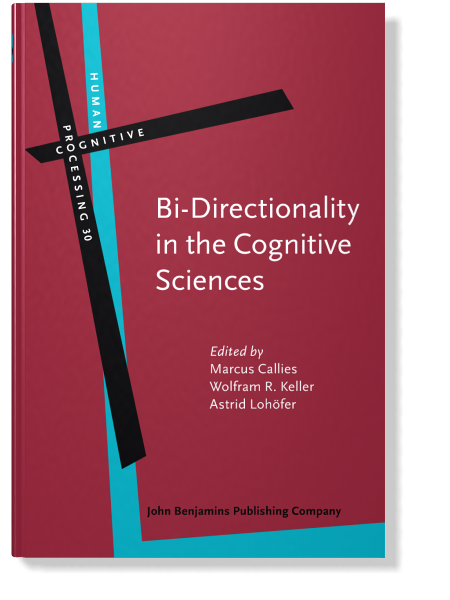
Edited by Marcus Callies, Wolfram R. Keller and Astrid Lohöfer
[Human Cognitive Processing 30] 2011
► pp. 249–278
Cognitive science meets language pedagogy
Published online: 13 July 2011
https://doi.org/10.1075/hcp.30.16zie
https://doi.org/10.1075/hcp.30.16zie
Bringing together insights from cognitive schema theories and studies on vocabulary acquisition in a foreign/second language (L2), this chapter singles out the importance of semantic schemas for teaching and learning word meanings. Its main theoretical hypothesis is that cognitive schemas underlying semantic representations of lexical meanings are effective didactic tools for teaching vocabulary. Relevant language-pedagogical concepts are discussed, such as “explicit teaching” and “rich instructions”. Having introduced basic elements of schemas, it is shown how schema-based illustrations could help to explain sense relations between words as well as the emergence of new meanings in complex constructions.

Cited by (2)
Cited by two other publications
Ziem, Alexander
[no author supplied]
This list is based on CrossRef data as of 10 december 2025. Please note that it may not be complete. Sources presented here have been supplied by the respective publishers. Any errors therein should be reported to them.