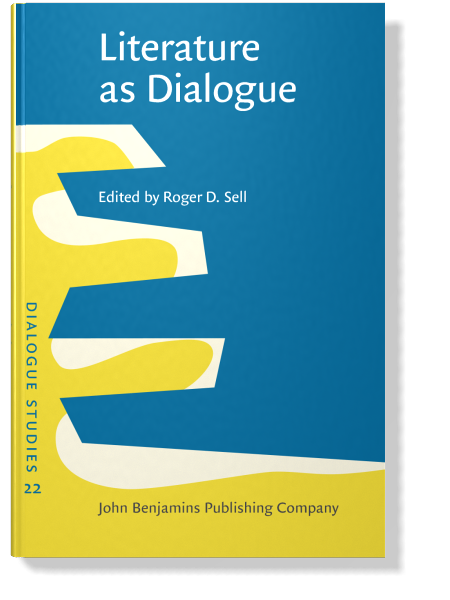
In:Literature as Dialogue: Invitations offered and negotiated
Edited by Roger D. Sell
[Dialogue Studies 22] 2014
► pp. v–viii
Get fulltext
This article is available free of charge.
Published online: 7 August 2014
https://doi.org/10.1075/ds.22.toc
https://doi.org/10.1075/ds.22.toc
Table of contents
List of figures
Acknowledgements
Contributors
Introduction
Part I. Communicational criticism: Evaluating the invitations offered to audiences by writers
Dialogue and dialogicity: Swift’s A Modest Proposal and Plato’s Crito
Silence and dialogue: The hermetic poetry of Wáng Wéi and Paul Celan
Multifaceted postmodernist dialogue: Julian Barnes’s Talking It Over and Love, etc.
Misunderstanding and embodied communication: The Comedy of Errors
The dialogic potential of "literary autism": Caryl Phillips’s Higher Ground (1989) and Marie NDiaye’s Trois femmes puissantes (2009)
Narrative and talk-back: Joseph Conrad’s “Falk”
Part II. Mediating criticism: Helping audiences to negotiate writers’ invitations
The role of emotions in literary communication: Joyce’s The Portrait of the Artist as a Young Man
In dialogue with the ageing Wordsworth
Rules of exchange in mediaeval plays and play manuscripts
Subjectivity and the dialogic self: The Christian Orthodox poetry of Scott Cairns and Cristian Popescu
Dialogues with Whitman in Polish: From a series of translations, through a series of retextualizations, towards a reception series:
Dialogues of cultures and national identity: Reuven Asher Braudes’ The Two Poles
Early Romantic hopes of dialogue: Friedrich Schlegel’s fragments
Index
