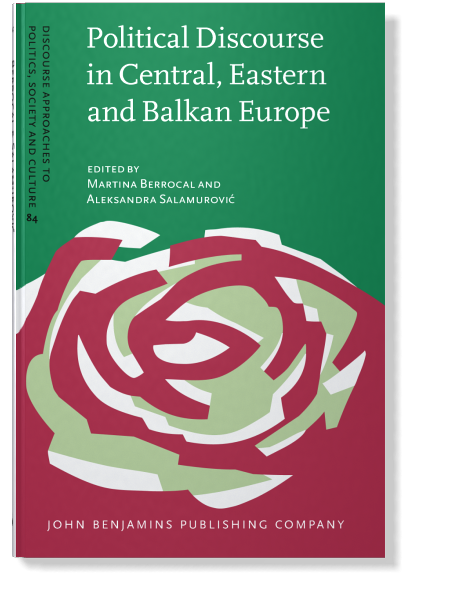
In:Political Discourse in Central, Eastern and Balkan Europe
Edited by Martina Berrocal and Aleksandra Salamurović
[Discourse Approaches to Politics, Society and Culture 84] 2019
► pp. 147–178
Chapter 7Impoliteness in parliamentary questions
Published online: 23 July 2019
https://doi.org/10.1075/dapsac.84.07now
https://doi.org/10.1075/dapsac.84.07now
Abstract
This chapter aims to examine Polish parliamentary discourse by linking (im)politeness theory with approaches describing questions. To achieve this, a corpus from four Polish Question Times was created, analyzing the degree of impoliteness in all of the 336 questions contained within it. In order to minimize the uncertainty of interpretations concerning the politicians’ intentions, scholarly literature from political sciences on parliamentary questions was also applied. Overall, the quantitative analysis revealed a high occurrence of face threatening acts via questions, and a substantial difference according to the political orientation of the opposition. The use of impolite questions by the right-wing opposition far exceeds the use of similar questions by the left-wing opposition. The qualitative analysis shows the full range of impolite questions, from weakest to strongest. Even within the ruling coalition, MPs deal with face threatening questions attacking their “own” government. They mitigate the face threat by using, for example, indirect formulations or the conditional mood. Apart from that, MPs pose partisan questions which enhance the face of their party’s ministers and simultaneously damage the one of the opposition.
Keywords: impoliteness, parliamentary discourse, questions
Article outline
- 1.Introduction
- 2.Parliamentary questions
- 2.1The legislative perspective
- 2.2From form to function
- 2.3The use of questions – The benefit of the addressee
- 3.The counterpart of politeness: Impoliteness
- 4.Method and data the corpus
- 5.Impolite questions
- 5.1Motivated impolite questions
- 5.2Avoiding impoliteness
- 5.3Negative impolite questions
- 5.4Positive impolite questions
- 5.4.1Impoliteness in indirect questions
- 5.4.2Impoliteness in direct questions
- 5.4.3Indirect impoliteness in questions
- 6.Summary
Notes References

References (56)
Athanasiadou, Angeliki. 1991. “The Discourse Function of Questions.” Pragmatics: Quarterly Publication of the International Pragmatics Association (IPrA) 1 (1): 107–22.
Batko-Tokarz, Barbara. 2008. Perswazja w Dyskursie Sejmowym. [Persuasion in the Sejm Discourse]. Kraków: Scriptum.
Berrocal, Martina. 2014. “Political Front-Stage and Backstage in the Czech Parliament.” Zeitschrift Für Slawistik 59 (4): 584–598.
Bevetori, Cinzia. 2004. “Negotiating Conflict: Interruptions in British and Italian Parliamentary Debates.” In Cross-Cultural Perspectives On Parliamentary Discourse, ed. by Paul Bayley, 87–109. Amsterdam: John Benjamins.
Bolinger, Dwight LeMerton. 1957. Interrogative Structures of American English. The Direct Question. Alabama: The American Dialect Society.
Bousfield, Derek. 2008. Impoliteness in Interaction. Amsterdam: John Benjamins.
Brown, Penelope, and Stephen Levinson. 1987. Politeness: Some Universals in Language Usage. Cambridge: Cambridge University Press.
Burkhardt, Armin. 2003. Das Parlament und Seine Sprache: Studien Zu Theorie und Geschichte Parlamentarischer Kommunikation. [The Parliament and its Language: Studies of Theory and History of Parliamentary Communication]. Tübingen: Niemeyer.
. 2004. Zwischen Monolog und Dialog: Zur Theorie, Typologie und Geschichte des Zwischenrufs Im Deutschen Parlamentarismus. [Between Monologue and Dialogue. Theory, Typology, and History of Interjections in German Parliamentary Debates]. Tübingen: Niemeyer.
Culpeper, Jonathan. 1996. “Towards an Anatomy of Impoliteness.” Journal of Pragmatics 25 (3): 349–367.
. 2008. “Reflections on Impoliteness, Relational Work and Power (Chapter 2).” In Impoliteness in Language: Studies on Its Interplay with Power in Theory and Practice, ed. by Derek Bousfield and Miriam A. Locher, 17–44. Berlin: Mouton de Gruyter.
Culpeper, Jonathan, Derek Bousfield, and Anne Wichmann. 2003. “Impoliteness Revisited: With Special Reference to Dynamic and Prosodic Aspects.” Journal of Pragmatics 35(10–11): 1545–79.
Goffman, Erving. 1967. Interaction Ritual: Essays on Face-to-Face Behavior. Garden City, New York: Anchor Books.
Gruber, Helmut. 1993. “Political Language and Textual Vagueness.” Pragmatics 3 (1): 1–28.
Harris, Sandra. 2001. “Being Politically Impolite: Extending Politeness Theory to Adversarial Political Discourse.” Discourse & Society 12 (4): 451–72.
Heritage, John. 2002. “The Limits of Questioning: Negative Interrogatives and Hostile Question Content.” Journal of Pragmatics, Negation and Disagreement, 34 (10): 1427–46.
House of Commons Information Office. 2010. “Parliamentary Questions (Factsheet P1; Procedure Series).” [URL]
Ilie, Cornelia. 1994. What Else Can I Tell You? : A Pragmatic Study of English Rhetorical Questions as Discursive and Argumentative Acts. Stockholm: Almqvist & Wiksell.
. 2003. “Histrionic and Agonistic Features of Parliamentary Discourse.” Studies in Communication Sciences 3 (1): 25–53.
. 2004. “Insulting as (Un)Parliamentary Practice in the British and Swedish Parliaments.” In Cross-Cultural Perspectives on Parliamentary Discourse, ed. by Paul Bayley, 45–86. Amsterdam: John Benjamins.
. 2006. “Parliamentary Discourses.” In Encyclopedia of Language & Linguistics, edited by Keith Brown, 2nd ed., 188–96. Oxford: Elsevier.
. 2010. “Managing Dissent and Interpersonal Relations in the Romanian Parliamentary Discourse.” In European Parliaments under Scrutiny: Discourse Strategies and Interaction Practices, ed. by Cornelia Ilie, 193–221. Amsterdam: John Benjamins.
Ionescu-Ruxandoiu, Liliana. 2010. “Straightforward vs. Mitigated Impoliteness in the Romanian Parliamentary Discourse. The Case of In Absentia Impoliteness.” Revue Roumaine de Linguistique LV (4): 343–351.
Kancelaria Sejmu. 2017. “Regulamin Sejmu Rzeczypospolitej Polskiej – Tekst Jednolity (The Sejm’s Authority).” [URL]
Kasper, Gabriele. 1990. “Linguistic Politeness: Current Research Issues.” Journal of Pragmatics, Special Issue on ‘Politeness’, 14 (2): 193–218.
Kühn, Peter. 1995. Mehrfachadressierung: Untersuchungen Zur Adressatenspezifischen Polyvalenz Sprachlichen Handelns [Multiple Addressing: Analyses on Addressee Specific Polyvalence of Linguistic Action]. Tübingen: Niemeyer.
Lakoff, Robin Tolmach. 1989. “The Limits of Politeness: Therapeutic and Courtroom Discourse.” Multilingua – Journal of Cross-Cultural and Interlanguage Communication 8 (2–3): 101–130.
Laskowska, Elżbieta. 2004. Dyskurs Parlamentarny w Ujęciu Komunikacyjnym [Parliamentary Discourse from the Communication Perspective]. Bydgoszcz: Wydawnictwo Akademii Bydgoskiej.
Locher, Miriam A. 2004. Power and Politeness in Action: Disagreements in Oral Communication. Berlin: de Gruyter.
Majkowska, Aneta. 2012. Debata Sejmowa jako Gatunek Wypowiedzi [Sejm Parliamentary Deliberations as a Genre]. Opole: Wydawnictwo WCM.
Martin, Shane. 2012. “Parliamentary Questions, the Behaviour of Legislators, and the Function of Legislatures: An Introduction.” In The Roles and Function of Parliamentary Questions, ed. by Shane Martin and Olivier Rozenberg, 1–12. Hoboken: Routledge.
Martin, Shane, and Olivier Rozenberg, eds. 2012. The Roles and Function of Parliamentary Questions. Hoboken: Routledge.
Murphy, James. 2014. “(Im)Politeness during Prime Minister’s Questions in the U.K. Parliament.” Pragmatics and Society 5 (1): 76–104.
Norton, Philip. 1993. “Introduction: Parliament since 1960.” In Parliamentary Questions, ed. by Philip Norton and Mark Franklin, 1–22. Oxford: Clarendon Press.
. 1993b. “Questions and Members.” In Parliamentary Questions, ed. by Philip Norton and Mark Franklin, 104–122. Oxford: Clarendon Press.
Nowak, Bartholomäus. 2016. “Posing Questions without Asking.” Zeitschrift Für Slawistik 61 (1): 57–73.
Ornatowski, Cezar M. 2010. “Parliamentary Discourse and Political Transition: Polish Parliament after 1989.” In European Parliaments under Scrutiny: Discourse Strategies and Interaction Practices, ed. by Cornelia Ilie, 223–64. Amsterdam: John Benjamins.
2014. “Learning to Differ: Transforming Parliament through Argument and Debate in Poland Post–1989.” In Let’s Talk Politics: New Essays on Deliberative Rhetoric, ed. by Hilde van Belle, Kris Rutten, Paul Gillaerts, Dorien van de Mieroop, and Baldwin van Gorp, 185–204. Amsterdam: John Benjamins.
Pérez de Ayala, Soledad. 2001. “FTAs and Erskine May: Conflicting Needs? – Politeness in Question Time.” Journal of Pragmatics 33 (2): 143–69.
Piazza, Roberta. 2002. “The Pragmatics of Conducive Questions in Academic Discourse.” Journal of Pragmatics 34 (5): 509–27.
Proksch, Sven-Oliver, and Jonathan B. Slapin. 2011. “Parliamentary Questions and Oversight in the European Union.” European Journal of Political Research 50 (1): 53–79.
Quirk, Randolph, Jan Svartvik, Geoffrey Leech, and Sidney Greenbaum. 1985. A Comprehensive Grammar of the English Language. London, New York: Longman.
Raunio, Tapio. 1996. “Parliamentary Questions in the European Parliament: Representation, Information and Control.” The Journal of Legislative Studies 2 (4): 356–82.
Rozenberg, Olivier, Olivier Chopin, Catherine Hoeffler, Bastien Irondelle, and Jean Joana. 2011. “Not Only a Battleground: Parliamentary Oral Questions Concerning Defence Policies in Four Western Democracies.” The Journal of Legislative Studies 17 (3): 340–53.
Rozenberg, Olivier, and Shane Martin. 2011. “Questioning Parliamentary Questions.” The Journal of Legislative Studies 17 (3): 394–404.
Russo, Federico, and Matti Wiberg. 2010. “Parliamentary Questioning in 17 European Parliaments: Some Steps towards Comparison.” The Journal of Legislative Studies 16 (2): 215–32.
Sacks, Harvey, Emanuel A. Schegloff, and Gail Jefferson. 1974. “A Simplest Systematics for the Organization of Turn-Taking for Conversation.” Language 50 (4): 696–735.
Cited by (1)
Cited by one other publication
Lastres-López, Cristina
2023. Morphosyntactic and pragmatic variation in conditional constructions in
English and Spanish parliamentary discourse. In Exploring Language and Society with Big Data [Studies in Corpus Linguistics, 111], ► pp. 308 ff.
This list is based on CrossRef data as of 8 december 2025. Please note that it may not be complete. Sources presented here have been supplied by the respective publishers. Any errors therein should be reported to them.