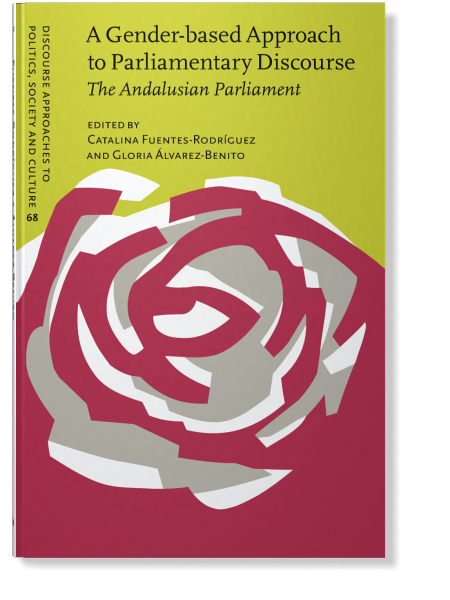
In:A Gender-based Approach to Parliamentary Discourse: The Andalusian Parliament
Edited by Catalina Fuentes Rodríguez and Gloria Álvarez-Benito
[Discourse Approaches to Politics, Society and Culture 68] 2016
► pp. 129–159
Get fulltext
Chapter 7Emotional argumentation in political discourse
Available under the Creative Commons Attribution-NonCommercial-NoDerivatives (CC BY-NC-ND) 4.0 license.
For any use beyond this license, please contact the publisher at rights@benjamins.nl.
Published online: 1 December 2016
https://doi.org/10.1075/dapsac.68.08alc
https://doi.org/10.1075/dapsac.68.08alc
Abstract
The aim of this chapter is to determine whether the expression of emotion is a meaningful variable in the argumentative discourse found in the Andalusian Parliament. The chapter also examines whether the gender factor has any relevance in the expression of emotion.This is because one of the main presuppositions in gender research is the stereotype that women are more expressive in relation to emotion and subjectivity.
We take into account appraisal theory and argumentation theory to see how affect, judgement and appreciation, less associated with formal and institutional discourse, are used with a strategic and communicative purpose: persuasion.
Article outline
- 1.Introduction
- 2.Emotion discourse
- 3.Emotion in parliamentary discourse: the speaker
- 4.Emotion in parliamentary discourse: the hearer
- 5.Conclusions
Acknowledgements Notes References

References (67)
Acuña Ferreira, V. (2009) Género y discurso. Las mujeres y los hombres en la interacción conversacional. Muenchen: Lincom.
Albelda Marco, M. (2007) La intensificación como categoría pragmática: revisión y propuesta. Bern: Peter Lang.
Alcaide Lara, E. R. (2010) “La descortesía (también) vende: acercamiento al estudio de estrategias descorteses en el discurso publicitario” in F. Orletti and L. Mariottini (eds.) La (des)cortesía en español: espacios teóricos y metodológicos para su estudio. Roma, Estocolmo: Università degli Studi Roma Tre- Programa EDICE (Universidad de Estocolmo), 221–244.
(2011) “La descortesía ‘sensibilizadora’: el caso de la publicidad de ONGs e instituciones en España” in S. Alcoba and D. Poch (coords.) Cortesía y publicidad. Barcelona: Ariel Letras, 27–48.
Arundale, R. B. (2006) “Face as relational and interactional: a communication framework for research on face, facework and politeness” in Journal of Politeness Research 2(2):193–216.
Bednarek, M. (2005) “Frames revisited: the coherence-inducing function of frames” in Journal of Pragmatics 37(5): 685–705.
(2009) “Emotion-talk and emotional-talk: cognitive and discursive perspectives” in H. Pishwa (ed.) Language and Social Cognition. Expression of the Social Mind (Trends in Linguistics. Studies and Monographs). Berlin: Mouton de Gruyter, 395–432.
Bravo, D. (2004) “Tensión entre universalidad y relatividad en las teorías de la cortesía” in D. Bravo and A. Briz (eds.) Pragmática sociocultural: estudios sobre el discurso de cortesía en español, 15–37.
Briz, A. (2003) “La estrategia atenuadora en la conversación cotidiana española” in D. Bravo (ed.) La atenuación de las divergencias mediante la risa en negociaciones españolas y suecas. Estocolmo: Biblioteca de la Universidad de Estocolmo, 17–46.
(2007) “Para un análisis semántico, pragmático y sociopragmático de la cortesía atenuadora en España y América” in Lingüística española actual 29(1):5–40.
Caffi, C. and R. Janney (1994) “Toward a pragmatics of emotive communication” in Journal of Pragmatics 22:325–373.
Carranza Márquez, A. (2012) “Diferencias de género en el uso del afecto dentro del foro parlamentario andaluz” in Discurso y sociedad 6 (1):98–114.
(2013) “La cortesía y los roles trampa para la mujer líder dentro del foro parlamentario andaluz” in Cultura, lenguaje y representación 11:41–66.
Chodorow, N. (1999) The Power of Feelings. Personal Meaning in Psychoanalysis, Gender and Culture. London: Yale University Press.
Ekman, P. (1997) “Should we call it expression or communication?” in Innovations in Social Science Research 10(4):333–344.
Fischer, A. H. (1993) “Sex differences in emotionality: fact or stereotype?” in Feminism and Psychology 3(3):303–318.
Fuentes-Rodríguez, C. (1991a) “Algunas reflexiones sobre el concepto de modalidad” in Revista de la Sociedad Española de Lingüística Aplicada 7:93–108.
(2012) “Subjetividad, argumentación y (des)cortesía” in CLAC (Círculo de Lingüística Aplicada a la Comunicación) 49:49–92.
Fuentes-Rodríguez, C. and E. Alcaide Lara (1996) La expresión de la modalidad en el habla de Sevilla. Sevilla: Publicaciones del Excmo. Ayuntamiento de Sevilla.
García Negroni, M. M. (1995) “Scalarité et réinterpretation: les modificateurs surréalisants” in J. C. Anscombre (comp.) Théorie des topoi. Paris: Kimé, 101–144.
Gee, J. P. (1999) “Mind and society: a response to Derek Edwards 'Emotion discourse'” in Culture and Psychology 5(3):305–312.
Hood, S. and J. R. Martin (2007) “Invoking attitude: the play of graduation in appraising discourse” in R. Hassan, C. M. I. M. Matthiessen and J. Webster (eds.) Continuing discourse on language. London: Equinox, 739–764.
Isik-Güler, H. and S. Ruhi (2010) “Face and impoliteness at the intersection with emotions: A corpus-based study in Turkish” in Intercultural Pragmatics 7(4):625–66.
Jakobson R. (1960) “Closing Statement: Linguistics and Poetics," in Style in Language (ed. Thomas Sebeok). Cambridge: MIT Press, 350–377.
Jansz, J. (2000) “Masculine identity and restrictive emotionality” in A. H. Fischer (ed.) Gender and emotion. Social psychological perspectives. Cambridge: Cambridge University Press, 166–186.
Kienpointner, M. (2008a) “Impoliteness and emotional arguments” in Journal of Politeness Research 4:243–265.
(2008b) “Cortesía, emociones y argumentación” in Actas del III. Coloquio Internacional del programa EDICE. Valencia: Universidad de Valencia, 22–26.
Lakoff, G. (1987) Women, Fire and Dangerous Things: What Categories Reveal about the Mind. Chicago: University of Chicago Press.
Langford, W. (1999) Revolutions of the Herat. Gender, Power and the Delusions of Love. London: Routhledge.
Locke, A. (2002) Gendered emotion: personal, cultural or discursive? in Feminism and Psychology 12(1):97–104.
Lutz, C.A. (1990a) “Morality, domination and understandings of “justifiable” anger among the Ifaluk” in G.R. Semin and K.J. Gergen (eds.) Everday understanding: social and scientific implications. London: Sage, 204–226.
Lutz, C. A. (1990b) “Engendered emotion: gender, power and the rhetoric of emotional control in American discourse” in C. A. Lutz and L. Abu-Lughod (eds.) Language and the politics of emotion. Cambridge: Cambridge University Press, 69–91.
Macagno, F. and D. Walton. (2014). Emotive language in Argumentation Cambridge: Cambridge University Press.
Macagno, F. (2010). The Argumentative Uses of Emotive Language. Revista Iberoamericana de Argumentación 4. Available at SSRN: [URL]. Accessed 01/04/2016.
Martin, J. R. (2000) “Beyond Exchange: APPRAISAL Systems in English” in S. Hunston and G. Thompson (eds.) Evaluation in Text. Oxford: Oxford University Press, 142–175.
Martin, J. R. and P. White (2005) The Language of Evaluation: Appraisal in English. London: Palgrave/Macmillan.
Plant, E. A., J. S. Hyde, D. Keltner and P. G. Devine (2000) “The gender stereotyping of emotions” in Psychology of Women Quarterly 24: 81–92.
Roulet, E. (1987) “Complétude interactive et connecteurs reformulatifs” in Cahiers de Linguistique Française 11(7):193–210.
Schrauf, R and J. Sánchez (2004) “The preponderance of negative emotion words across generations and across cultures” in Journal of Multilingual and Multicultural Development 25(2–3):266–284.
Van Eemeren, F. H. and Grootendorst, R. (1992) Argumentation, Communication, and Fallacies: a Pragma-dialectical Perspective. Hillsdale, NJ: L. Erlbaum.
(2004) A Systematic Theory of Argumentation: The Pragma-Dialectical Approach. Cambridge: Cambridge University Press.
Van Eemeren, F. H. et al. (eds.) (2007) Argumentative Indicators in Discourse: A Pragma-Dialectical Study. Dordrecht: Springer.
Walton, D. N. (1992) The Place of Emotion in Argument. University Park, Pennsylvania: Penn State University Press.
Cited by (5)
Cited by five other publications
Orbegozo-Terradillos, Julen, Ainara Larrondo-Ureta, Nayla Escribano, Simón Peña Fernández & Rodrigo Agerri
Lastres-López, Cristina
2023. Morphosyntactic and pragmatic variation in conditional constructions in
English and Spanish parliamentary discourse. In Exploring Language and Society with Big Data [Studies in Corpus Linguistics, 111], ► pp. 308 ff.
Longobardi, Sara
Rodríguez, Catalina Fuentes
This list is based on CrossRef data as of 8 december 2025. Please note that it may not be complete. Sources presented here have been supplied by the respective publishers. Any errors therein should be reported to them.