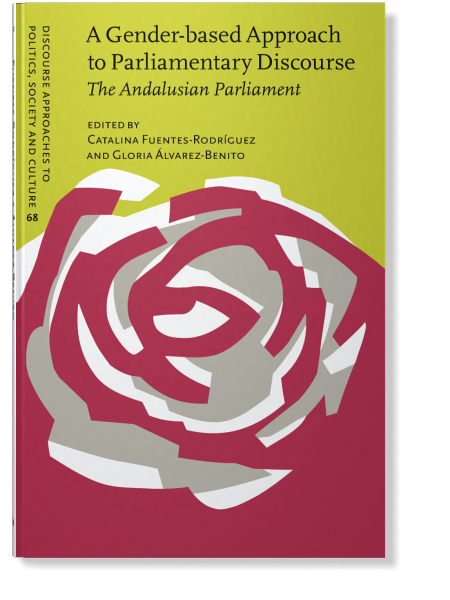
In:A Gender-based Approach to Parliamentary Discourse: The Andalusian Parliament
Edited by Catalina Fuentes Rodríguez and Gloria Álvarez-Benito
[Discourse Approaches to Politics, Society and Culture 68] 2016
► pp. 109–128
Get fulltext
Chapter 6Lexical colloquialisation in commissions of the Andalusian Parliament
Available under the Creative Commons Attribution-NonCommercial-NoDerivatives (CC BY-NC-ND) 4.0 license.
For any use beyond this license, please contact the publisher at rights@benjamins.nl.
Published online: 1 December 2016
https://doi.org/10.1075/dapsac.68.07san
https://doi.org/10.1075/dapsac.68.07san
Abstract
Through the analysis of parliamentary interventions in the Andalusian Parliament, it is shown how politicians use lexical colloquial features. We assume that there is an expansion of the colloquial employ of the Spanish language, which also reaches formal discursive types such as the parliamentary interaction. To try to confirm this claim, we work with a corpus of 4 commissions in the Andalusian Parliament, focusing on lexical features. We apply both a quantitative and a qualitative approach to prove that, generally speaking, parliamentarians often use colloquial lexical features. Basing on the gender parameter, we show that there is no relevant difference. Finally, we focus on the causes of this tendency, by addressing the interface of media and political discourse.
Article outline
- 1.Introduction
- 2.The parliamentary dynamics
- 3.Data
- 4.Methodological approach
- 5.The analysis of the data
- 5.1Words without a specific meaning
- 5.2Colloquial vocabulary
- 5.3Phraseological units
- a.Proverbs
- b.Phraseological collocations
- c.Idioms
- 5.4The gender parameter
- 5.5The media factor
- 6.Conclusions
Notes References

References (91)
Alcaide Lara, E. R. (1999) “Las intervenciones parlamentarias: ¿lengua hablada o lengua escrita?” in Anuario de Estudios Filológicos 22(9): 9–36.
Álvarez-Benito, G., G. Fernández Díaz and I. Íñigo Mora (eds.) (2009) Discourse and Politics. Cambridge: Cambridge Scholars Publishing.
Alvarez-Cáccamo, C. and G. Prego-Vázquez (2003) “Political cross-discourse: conversationalisation, imaginary networks, and social fields in Galizia” in Pragmatics 13: 145–62.
Antaki, Ch. and Leudar, I. (2001) “Recruiting the record: Using opponents’ exact words in parliamentary argumentation” in Text 21(4): 467–488.
Archakis, A. and V. Tsakona (2009) “‘The wolf wakes up inside them, grows werewolf hair and reveals all their bullying’: The representation of parliamentary discourse in Greek newspapers” in Journal of Pragmatics 42: 912–23.
Barkema, H. (1996) “Idiomaticity and terminology: a multi-dimensional descriptive model” in Studia Linguistica 50(2): 125–160.
Bayley, P. (2004) “Introduction. The whys and wherefores of analyzing parliamentary discourse” in P. Bayley (ed.) Cross Cultural Perspectives on Parliamentary Discourse. Amsterdam, Philadelphia: John Benjamins, 1–44.
Brenes Peña, M. E. (2011) Descortesía verbal y tertulia televisiva. Análisis pragmalingüístico. Bern: Peter Lang, Fondo hispánico de lingüística y filología.
and Grupo Val. Es. Co. (2010) “Lo coloquial y lo formal: el eje de la variedad lingüística” in R. M. Castañer and V. Lagüens (eds.) De moneda nunca usada. Estudios dedicados a José M.Enguita. Zaragoza: Institución “Fernando el Católico”, Diputación de Zaragoza, 125–33.
(2013) “Variación pragmática y coloquialización estratégica. El caso de algunos géneros televisivos” in C. Fuentes (ed.) Descortesía para el espectáculo: estudios de pragmática variacionista. Madrid: Arco/Libros, 89–125.
Burger, H., D. Dobrovol’skij, P. Kühn and N. R. Norrick (2007) “Phraseology: Subject area, terminology and research topics” in H. Burger, D. Dobrovol’skij, P. Kühn and N. R. Norrick (eds.) Phraseology: an International Handbook of Contemporary Research. Berlin, New York: Mouton de Gruyter, 10–19.
(eds.) (2007) Phraseology: an International Handbook of Contemporary Research. Berlin, New York: Mouton de Gruyter.
Čermák, F. (2007) “Idioms and morphology” in H. Burger et al. (eds.) Phraseology: an International Handbook of Contemporary Research. Berlin, New York: Mouton de Gruyter, 20–26.
Clayman, S. and J. Heritage (2002) The News Interview: Journalists and Public Figures on the Air. Cambridge: Cambridge University Press.
Chilton, P. and C. Schafner (2000) “Discurso y política” in T.van Dijk (comp.) El discurso como interacción social. Estudios sobre el discurso II. Una introducción multidisciplinaria. Barcelona: Gedisa, 297–329.
Chilton, P. and C. Schäffner (2002) Politics as Text and Talk: Analytical Approaches to Political Discourse. Philadelphia, PA, USA: John Benjamins Publishing Company.
Córdoba Abundis, P. (2003) “¿Habla coloquial femenina?” in Revista electrónica de Estudios Filológicos 6. [URL]. Accessed: 23/02/2015.
(2003) Diez años de investigación en fraseología: análisis sintáctico-semánticos, contrastivos y traductológicos. Madrid: Iberoamericana.
Cowie, A. P. (1994) “Phraseology” in R. E. Asher (ed.) The Encyclopedia of Language and Linguistics. Oxford: Oxford University Press, 3168–3171.
Elspaß, S. (2002) “Phraseological units in parliamentary discourse” in P. A. Chilton and C. Schäffner (eds.) Politics as Text and Talk: Analytic Approaches to Political Discourse. Philadelphia, PA, USA: John Benjamins Publishing, 81–110
(2007) “Phrasemes in political speech” en H. Burger et al. (eds.) Phraseology: an International Handbook of Contemporary Research. Berlin, New York: Mouton de Gruyter, 284–291.
Engkent, L. P. (1986) “Real People don’t Talk Like Books: Teaching Colloquial English” in TESL Canada Journal, Special Issue 1, November 1986: 225–234.
Espi, M. J., L. Coupaland and R. Brisson (1996) “Hacia una redefinición del español coloquial” in Langue et linguistique 22: 23–39.
Everaert, M., E. J. van der Linden and A. Schenk (eds.) (1995) Idioms: Structural and Psychological Perspectives. Hillsdale: Lawrence Erlbaum Associates.
(1998) “Political discourse in the media: analytical framework” in A. Bell and P. Garret (eds.) Approaches to Media Discourse. Oxford: Blackwell, 142–62.
Fernández Lagunilla, M. (1999a) La lengua en la comunicación política I: El discurso del poder. Madrid: Arco/Libros.
Fetzer, A. (2009) “Political interviews in the Media: The Private-Public Interface” in G. Álvarez-Benito et al. (eds.) Discourse and Politics. Cambridge: Cambridge Scholars Publishing, 97–114.
Fetzer, A. and E. Weizman (2006) “Political discourse as mediated and public discourse” in Journal of Pragmatics 38(2):143–153.
Fetzer, A. and G. E. Lauerbach (2007) Political discourse in the media: cross-cultural perspectives. Amsterdam: John Benjamins.
Gazdić-Alerić, T. (2009) “The Phraseology of the Croatian Political Substyle” in Südslavistik Online 1: 73–90.
Ginzburg, R. S., S. S. Khidekel, G. Y. Knyazeva and A. A. Sankin (1979) A Course in Modern English Lexicology. Moscow: Moscow Vysšaja Škola.
Gläser, R. (1986) “A plea for Phraseo-Stylistics” in D. Kastovsky and A. Szwedek (eds.) Linguistics across Historical and Geographical Boundaries: In Honour of Jacek Fisiak on the Occasion of his 50. Birthday. Trends in Linguistics: Studies and monographs, 32, vol. 1, Linguistic Theory and Historical Linguistics. Berlin, New York and Amsterdam: Mouton de Gruyter, 41–52.
Gómez Alonso, J. C. (2001) “La construcción del «otro»: análisis del exordium en los discursos parlamentarios de Castelar” in J. A. Hernández Guerrero (ed.), F. Coca and I. Morales (coords.) Emilio Castelar y su época. Cádiz: Universidad and Fundación Municipal de Cultura, 215–22.
Harris, S. (2001) “Being politically impolite: extending politeness theory to adversarial political discourse” in Discourse & Society 12: 451–72.
Igualada Belchí, D. (2006) “Marcas axiológicas en el discurso parlamentario” en M. Casado, R. González and M.ª V. Romero (coord.) Análisis del discurso: lengua, cultura, valores. Actas del I Congreso Internacional vol. II. Madrid: Arco/Libros, 1405–15.
Ilie, C. (2006) “Parliamentary discourse” in K. Brown (ed.) Encyclopedia of Language and Linguistics. Oxford: Elsevier, 188–197.
Koch, P. (1999) “Court Records and Cartoons. Reflections of Spontaneous Dialogue in Early Romance Texts” in A. H. Jucker, G. Fritz and F. Lebsanft (eds.) Historical Dialogue Analysis. Amsterdam, Philadelphia: John Benjamins Publishing, 399–429.
Koch, P. and W. Osterreicher (2000[1970]) “Langage parlé et langage écrit” in G. Holtus, M. Metzeltin and Chr. Schmidt (eds.) Lexicon der Romanistchen Linguistik. Tübingen: Band 1, Niemeyer, 584–627.
Lee, D. (2001) “Genres, registers, text types, domains and styles: Clarifying the concepts and navigating a path through the BNC jungle” in Language Learning & Technology 5(3): 37–72.
Leudar, I. and J. Nekvapil (2004) “Media dialogical networks and political argumentation” in Journal of Language and Politics 3(2): 247–266.
López García, G. (2004) “El lenguaje político reflejado a través de los medios de masas” in Actas del IV Congreso de Lingüística General III. Madrid: Arco Libros, 1581–1596.
López Serena, A. (2009) “Los medios de comunicación audiovisual como corpus para el estudio de la sintaxis coloquial” in M. V. Camacho Taboada, J. J. Rodríguez Toro and J. Santana Marrero (eds.) Estudios de lengua española: Descripción, variación y uso. Homenaje a Humberto López Morales. Madrid, España: Iberoamericana 1, 405–437.
Luque Durán, J. de. D. and F. J. Manjón Pozas (1998) “Fraseología, metáfora y lenguaje taurino” in J. de D. Luque and F. J. Manjón (eds.) Léxico y fraseología. Granada: Método Ediciones.
Mancera, A. (2008a) “La reformulación en el discurso periodístico: una muestra de oralidad fingida” in Oralia 11: 353–74.
(2008b) “Oralidad y coloqualidad en la prensa española: la columna periodística” in I. Olza et al. (eds.) Actas del XXXVII Simposio Internacional de la SEL. Pamplona: Servicio de Publicaciones de la Universidad de Navarra, 469–78.
(2009b) “Los estudios sobre el español coloquial en España: breve panorama” in E-Excellence I(1): 1–39.
Martín Rojo, L. (2000) “Enfrentamiento y consenso en los debates parlamentarios sobre la política de inmigración en España” in Oralia. Análisis del discurso oral 3: 113–148.
Martín Sánchez, M. (1997) Diccionario del español coloquial (dichos, modismos y locuciones populares). Madrid: Fundación.
Martínez Costa Pérez, M. P. and S. Herrero Damas (2008) “La tertulia radiofónica como un tipo de conversación coloquial” in Doxa comunicación 5: 189–211.
Miller, J. E. and R. Weinert (2009) Spontaneous spoken language: syntax and discourse. Oxford, New York: Oxford University Press.
Milroy, J. and L. Milroy (1999) “Planned and unplanned speech events” in J. Milroy and L. Milroy Authority in Language: Investigating Standard English. London: Routledge & Kegan Paul, 140–146.
Narbona Jiménez, A. (1988[1989]) “Sintaxis coloquial: problemas y métodos” in LEA. Lingüística Española Actual X/1: 81–106.
Norrick, N. R. (2007) “Proverbs as set phrases” in H. Burger et al. (eds.) Phraseology: an International Handbook of Contemporary Research. Berlin, New York: Mouton de Gruyter, 381–393.
Oesterreicher, W. (1996) “Lo hablado en lo escrito. Reflexiones metodológicas y aproximación a una tipología” in T. Kotschi, W. Oesterreicherand K. Zimmermann (eds.) El español hablado y la cultura oral en España e Hispanoamérica. Franckfurt am Main: Vervuert Verlag, Bibliotheca Ibero-americana, 317–340.
Pamies, A. (2007) “Spanish phraseography” in H. Burger et al. (eds.) Phraseology: an International Handbook of Contemporary Research. Berlin, New York: Mouton de Gruyter, 986–997.
Ramírez, R. and T. Álvarez (2006) “Aproximación a un análisis pragmático del refrán: dimensión argumentativa” in Didáctica (Lengua y Literatura) 18: 221–236.
(2000) “La fraseología” in A. Briz and Grupo Val. Es. Co. (eds) ¿Cómo se comenta un texto coloquial? Barcelona: Ariel, 169–189.
Santos Gargallo, I. (1997) “Algunos aspectos léxicos del lenguaje de un sector juvenil: Historias del Kronen de J. A. Mañas” in Revista de Filología Románica 14 (I): 455–473.
Seco, M., O. Andrés and G. Ramos (2004) Diccionario fraseológico documentado del español actual. Locuciones y modismos españoles. Madrid: Aguilar.
Sevilla, J. and J. Cantera (eds.) (2001) 1001 refranes españoles con su correspondencia en ocho lenguas. Madrid: EIUNSA.
Stubbs, M. (2002) “Two quantitative methods of studying phraseology” in International Journal of Corpus Linguistics 7(2): 215–244.
Tannen, D. (1998) The Argument Culture: Stopping America’s War of Words. New York: Ballantine Books.
Van Dijk, T. A. (2000) “Parliamentary debates” in R. Wodak and T. A. Van Dijk (eds.) Racism at the Top. Parliamentary Discourse on Ethnic Issues in Six European States. Austria: Klagenfurt, 45–78.
(2003) “Knowledge in parliamentary debates” in Journal of Language and Politics 2(1): 93–129.
(2004) “Text and context of parliamentary debates” in P. Bayley (ed.) Cross-Cultural Perspectives on Parliamentary Discourse. Amsterdam, Philadelphia: John Benjamins, 339–372.
Vellón Lahoz, J. (2011) “El registro coloquial en el texto informativo: entre el estilo periodístico y la estrategia comunicativa” in Estudios sobre el mensaje periodístico 17(2): 675–690.
Vigara Tauste, A. M. (1992) Morfosintaxis del español coloquial. Esbozo estilístico. Madrid: Gredos.
Cited by (1)
Cited by one other publication
Mair, Christian
This list is based on CrossRef data as of 8 december 2025. Please note that it may not be complete. Sources presented here have been supplied by the respective publishers. Any errors therein should be reported to them.