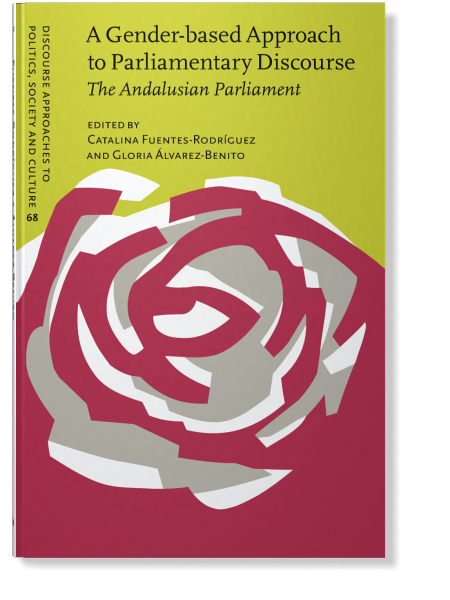
In:A Gender-based Approach to Parliamentary Discourse: The Andalusian Parliament
Edited by Catalina Fuentes Rodríguez and Gloria Álvarez-Benito
[Discourse Approaches to Politics, Society and Culture 68] 2016
► pp. 93–108
Get fulltext
Chapter 5Pseudo-desemantisation as a discursive strategy in political discourse
Available under the Creative Commons Attribution-NonCommercial-NoDerivatives (CC BY-NC-ND) 4.0 license.
For any use beyond this license, please contact the publisher at rights@benjamins.nl.
Published online: 1 December 2016
https://doi.org/10.1075/dapsac.68.06gar
https://doi.org/10.1075/dapsac.68.06gar
Abstract
In parliamentary discourse, lexical elements are routinely used by MPs, regardless of ideology and gender factors. The only important difference lies between government and opposition. Therefore, no remarkable lexical innovations are expected. In parliamentary interventions, there is a reduction in ideological polarity and a tendency to use words that suffer a process of pseudo-desemantisation (i.e. loss of its full and original meaning) with an intensifying function.
Article outline
- 1.Introduction
- 2.The collocational sphere
- 3.Pseudo-desemantisation
- 4.Conclusions
Notes References

References (6)
Casas Gómez, M. (2009) “Hacia una nueva perspectiva en la definición lingüística del eufemismo” in C. Fuentes-Rodríguez and E. R. Alcaide Lara (eds.) Manifestaciones textuales de la descortesía y agresividad verbal en diversos ámbitos comunicativos. Sevilla: Universidad Internacional de Andalucía, 11–29.
Castillo Carballo, M.ª A. and J. M. García Platero (2012) “Peculiaridades léxicas y recurrencias semánticas en el discurso parlamentario” in Discurso y Sociedad 6 (1): 115–126.