In:Studies in Political Humour: In between political critique and public entertainment
Edited by Villy Tsakona and Diana Elena Popa
[Discourse Approaches to Politics, Society and Culture 46] 2011
► pp. 217–241
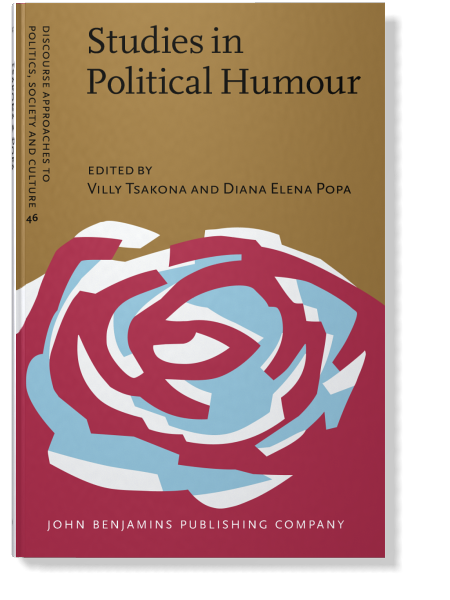
Chapter 9. Politics of taste in a post-Socialist state
A case study
Published online: 15 November 2011
https://doi.org/10.1075/dapsac.46.14lai
https://doi.org/10.1075/dapsac.46.14lai
The link between jokes and social reality is visible in the way jokes adapt to different sociopolitical contexts by dealing with the most salient issues of such contexts. This chapter casts light on another facet of the relationship of jokes and their social context. Ideas about jokes are influenced by their social context, being continuously reformulated by social change or political manipulation. This case study analyses the official and unofficial media discourses that address the issues of taste and sense of humour, as emerging from a recent polemics about Estonian ethnic jokes. The different standpoints reflect ideas about the content and functions of the jokelore, characterising jokes either as an essentially racist or as a funny (i.e. harmless) genre.

Cited by (6)
Cited by six other publications
Takovski, Aleksandar & Nenad Markovikj
Tsakona, Villy
2022. “The doctor said I suffer from Vitamin € deficiency”. Pragmatics. Quarterly Publication of the International Pragmatics Association (IPrA) ► pp. 287 ff.
Chovanec, Jan & Villy Tsakona
2018. Investigating the dynamics of humor. In The dynamics of interactional humor [Topics in Humor Research, 7], ► pp. 1 ff.
Laineste, Liisi
[no author supplied]
This list is based on CrossRef data as of 8 december 2025. Please note that it may not be complete. Sources presented here have been supplied by the respective publishers. Any errors therein should be reported to them.