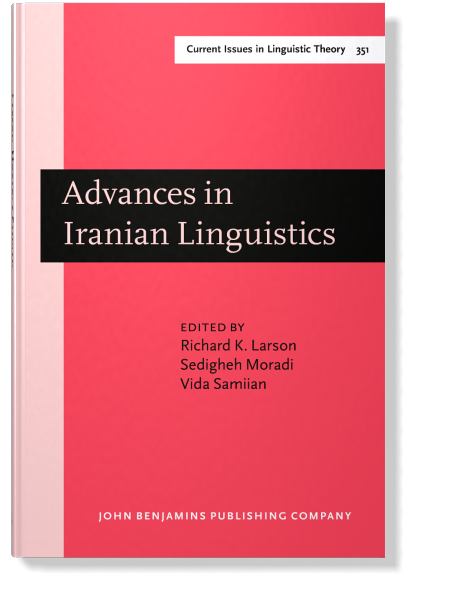
In:Advances in Iranian Linguistics
Edited by Richard K. Larson, Sedigheh Moradi and Vida Samiian
[Current Issues in Linguistic Theory 351] 2020
► pp. 307–309
Subject index
Published online: 22 July 2020
https://doi.org/10.1075/cilt.351.si
https://doi.org/10.1075/cilt.351.si
A
- accusative alignment 137–138, 140
- agreement
6–7, 73, 78–79, 85–104, 142–145, 155, 181, 218, 224, 230–231
- agreement cycle 85–88, 90–92, 99
- agreement markers 6–7, 60, 74, 78, 86–87, 96, 98–99, 103, 137–140, 142–144, 148–151 ; see also topic agreement
- alignment 2, 7, 137–141, 233 ; see also accusative alignment, ergative alignment
- additive marker 8–9, 57, 59, 68–71, 73–79
- anaclasis 251, 254
- anacreontic251
- anaphor
10, 15–16, 20, 22–23, 25
- anaphor resolution15
- antecedent 10, 15–16, 19–25, 112, 115, 160–161, 259–260, 267, 272
- assignment function 22, 125
- attributive 175, 200, 201, 226, 230–232
B
- benefactive 167, 169–170, 289
- beneficiary 144, 166
- bi-morphemic18
- binding
10, 15–16, 19, 22–25
- binding domain18
- bisyndetic coordination 69–70, 77
- bound variable 22–23, 25
- bridging context 7, 137, 139, 143, 150
C
- Case marking
139, 150, 199, 221, 223–224, 268
- Case-assigning199
- Case-assignment 159, 165–166, 199
- Case-marker 80, 155, 196, 225
- Case-marking analysis 59, 199, 201, 206, 210–212, 221, 225–226, 231
- Case-marking requirement201
- Case-probe 230–231
- Case-requiring199see also double Case phenomenon, inherent Case, DP external Case, DP internal Case, non-Case-assigning, structural Case
- catalexis246
- c-command 19, 24–25, 156, 159–166, 168–169
- Classical Persian poetry 237–244, 247, 249–251, 253–254
- classification, language 1, 3, 5–6, 29–33, 35–37, 39–40, 42–43, 45–51
- clausal projection201
- clitic
9, 25, 57, 60, 66, 79, 85–87, 92–104, 138–139, 144–146, 148, 155–158, 161, 163, 170, 199, 201, 208, 210, 275–276, 278–279, 286, 289–290, 293, 295–296
- cliticization 7, 17, 86, 104
- clitic doubling 94, 100–101, 104, 155 ; see also enclitic
- co-indexation 19, 22
- comparative method 35–36, 39, 43, 46–47
- comparative suffix58
- complement clauses 8, 173, 200–201
- complex predicate 73–74, 144, 170
- compound verb 144–145
- concordiality/agreement233
- concordializer 230–231
- Condition A 16, 18
- Condition B 16, 18–19
- contrastive focus 16, 95, 98, 258, 261, 265, 270–272
- coordination 10, 68–69, 77, 83, 90, 147, 257, 270–271
- co-predication 179–180
- co-reference
19, 23
- coreferent 97, 147
- cross-clausal referential relations19
D
- dative 141–142, 149–150, 155, 169–170, 224, 279–282, 284, 291
- de re blocking effect24
- definiteness 10, 59, 61–62, 79–80, 92, 103, 107, 119–120, 125–127, 132–133, 155
- dependent Case 9, 60, 155–156, 159–160, 162, 165–166, 168–170
- derivation 9, 17, 25, 57–58, 61–63, 87–89, 115–117, 132, 134–135, 156, 178, 186, 231
- derived nominal 215–217
- Detachment Principle67
- differential object marking 133, 145, 155, 275, 278
- directed graph 6, 29, 40, 44
- discourse markers
59, 63–64, 66, 79
- discourse particle 59, 63–68
- disjunctive Case hierarchy159
- double Case phenomenon 224, 225
- doubled or strengthened Ezafe 222–226
- DP external Case 223, 224
- DP internal Case 223, 224
E
- EDGE Features 186–187
- ellipsis 10, 23, 25, 171, 257–258, 268, 271–272
- emphatic 17–18, 22, 77, 90–91, 99, 103
- enclitic 6–7, 9, 18, 57, 60–61, 67–68, 72, 78–79, 137–146, 148–151, 294–295
- enclitic pronoun 7, 137–138, 140–143, 146, 149, 294–295
- ergative
2, 103, 137–140, 142–143, 150–151, 159
- ergative alignment 99, 137, 139–140
- ergative subject 142, 150
- experiencer 7, 137–138, 144–152, 276, 283–285, 297
- experiencer construction 7, 137–138, 144, 148–151, 275
- Ezafe
8, 17–18, 59–60, 62, 79–80, 148, 157, 173–178, 180–181, 183–197, 199–206, 208–212, 214–215, 218–223, 225–226, 228, 230–232, 285–286, 288, 292–293
- Ezafe and Relative Clauses 176, 189
- Ezafe Recursion 208–209
F
- Finite Clausal Complement 200, 202, 205
- Finite Relative Clauses (FRC) 176, 189–191, 200, 205–209, 228–229
- focus 16, 65, 68–69, 75–76, 79–80, 90, 101, 120–121, 259, 261–262, 265, 269, 271–272, 275 ; see also contrastive focus
- folk song 10–11, 237–240, 242, 244–247, 251, 253–254
- foot246
- feet244
- force-directed graph 6, 33, 40, 44, 49
G
- gender 89, 102–103, 222
- genealogical inheritance 6, 29, 43, 50
- genitive 149, 159, 186, 191, 202–205, 208, 210, 223–224, 230
- glottometric diagram 36–37, 39, 50
- grammaticalization 7, 66–67, 76, 79, 85–86, 88, 93, 96, 102–104
H
- hanging topic 7, 138–139, 143–144, 146–148, 150–151
- hanging topic construction 97, 138–139, 143, 150
- Head Movement 88, 185, 190
- Head Preference Principle (HPP) 66–67, 87–89, 92, 103
- head pronoun 89–90, 99
- historical linguistics38
I
- indexation 17, 19, 22–23
- information structure
261, 272
- information structural accounts 120–121, 125, 132
- inherent Case224
- internal nominality 208–209, 211
- Ionic dimeter250
- iota operator 116, 132
L
- lambda operator22
- language atlas 29, 49–50
- language contact 9, 32, 38–39, 43, 46–47, 50, 275, 283, 296
- language identity48
- language mapping 29–31
- Late Merge Principle67
- lexical constraints220
- licensing requirement 8, 173, 196, 199
- local binding16
- logophor24
- logophoric 23–24
- logophoricity 15, 23–24
- long distance binding16
M
- monomorphemic forms 18, 21
- monomorphemic xod 16, 22
- moras 238–239
- morphological affix 174, 186
- multi-dimensional language relation web 38, 40–42, 49
- multigraph 40, 49–50
- multiple-constraints framework 10, 16, 19, 24
N
- negation 10, 76, 85, 100, 257–258, 263–266, 268, 271–272
- Negative Stripping 10, 257–268, 271–272
- NeighborNet 36–37, 39
- neutral intonation21
- nominal complementizer206
- nominal gerund 215–216, 218, 220
- nominality 206, 208, 221
- nominalization 211, 214, 218, 220–221
- nominalized P 218, 221
- nominalized pP 219, 221
- nominals 10, 58, 107, 116–117, 120, 123, 128, 132, 158, 173, 191, 193, 197–202, 205, 215, 223, 226
- non-Case-assigning199
- non-coreferential reading17
- non-nominal complementizer206
- null pronoun22
- Nunaliit Atlas Framework31
O
- object
7, 9, 17–18, 22, 40, 60, 85–86, 94, 99–104, 119–124, 127–133, 138, 145, 151, 155–157, 159–162, 166, 179, 184, 192, 207–208, 212, 215–216, 218, 223, 232, 261, 269, 275–276, 278–283, 297
- object agreement 7, 86, 91–92, 101–104
- object marker 9, 17–18, 60, 119–124, 128–132, 145, 155, 279, 282–283, 297
- object pronouns 7, 86, 90–92, 99–104
- oblique Case marking
139, 223–224
- oblique marking 277, 287
- omission 139–142
- omitted subject139
P
- participle 2, 62, 191, 209, 228–229
- partitive Qs185
- person-neutral25
- plural marker 9, 61–62, 80, 150
- plural marking80
- poetic license 240–241, 245, 251–253
- Polarity stripping 10, 258, 265–267, 271–272
- polysemy
63–64, 77, 79, 83
- polysemous 9, 61, 68, 74
- postpositions296
- pragmaticalization 66–67
- predicate
16–17, 22–23, 25, 67, 73–74, 78, 94, 100, 103, 132, 144–145, 156, 164–166, 168, 170, 178–201, 220, 231, 260, 276, 283–284, 288–289, 297
- predicate-forming operator 178, 180
- Predication Marker178
- predication structures180See also Stative Predicates
- preposition
78, 156–157, 160–161, 168–170, 192–194, 196, 197, 215, 220, 223, 225, 231, 284, 293–296
- prepositional complementation212
- prepositional constructions293
- presupposition
119–121, 125–128, 130–132
- Presupposed information 9, 117, 132
- processing 22, 63, 87
- pronominal enclitic 9, 72, 74, 78–79
- pronominalization18
- pronoun
6–7, 10, 15–24, 66, 73, 77, 86–104, 137–151, 163, 206–208, 280, 294–296
- pronominalizationSee also pronominal enclitics
- Pseudo-stripping 10, 258, 260, 268, 270–272
Q
- quantifier 22, 110–112, 116, 121, 123–125, 132, 174, 185
- quantitative meter 10, 247–248, 251
R
- Ramal Mashkool250
- reanalysis 7, 101, 137–139, 150
- reduced relative clauses (RRC) 176–177, 189–191, 195, 200, 205, 209, 228–229
- reflexive 16–17, 19–20, 146–147
- resumptive pronouns 95, 207–208
- Reverse Ezafe 8, 174, 222, 226–232
- roll-up movement 181, 183, 234
- Romance complementizers207
- rukn244
S
- scope 67, 69, 108, 110–113, 115, 118, 123–125, 127, 188, 218
- semantic binding 23, 25
- semantic information19
- song lyrics11
- source/perceiver contrast 19–22, 24
- specificity 9, 113, 119–125, 127, 130, 132–133, 155, 160, 278
- Stative Predicates220
- stress 59–62, 95, 100, 229, 237, 240, 247–249, 296 ; See also unstressed
- Stripping 10, 257–258, 260, 263, 265–268, 270–272
- structural Case 159, 165–166, 223–224
- subject
16–25, 73, 78, 80, 86, 88, 90–92, 94–99, 102–104, 132, 137–151, 156–159, 161–166, 168–171, 178–180, 207, 239, 258, 261, 271, 277, 284, 288
- subject agreement 73, 78, 86, 88, 90, 92, 94, 96, 99, 102–103
- subjecthood145
- Suffixaufnahme 224–225
- superheavy syllable 239–240, 242, 244, 251
- syntactic binding 10, 19, 22, 25
T
- thematic role 19–20
- Theme 25, 76, 145, 147–149, 151
- topic 7, 75–77, 96, 119–120, 137–138, 141, 150, 160, 164, 170–171, 261, 265
- topic agreement 7, 137–138, 150 ; See also hanging topic and hanging topic construction
U
- Uninterpretable 88–89, 92–93, 158, 266
- Uninterpretable/unvalued feature232
- unstressed 60, 90
V
- Valued feature232
- verbal agreement 6–7, 87, 137, 143, 148
- Verbal complementation212
- Verbal gerund 215, 217–218, 220
- vowel shortening 11, 238, 241–245, 251, 253–254
- VP ellipsis23
W
- weak subject orientation22
Z
- zero expression 96, 139
Φ
- (phi-)Φ-features 18, 89–90, 92–93, 99
