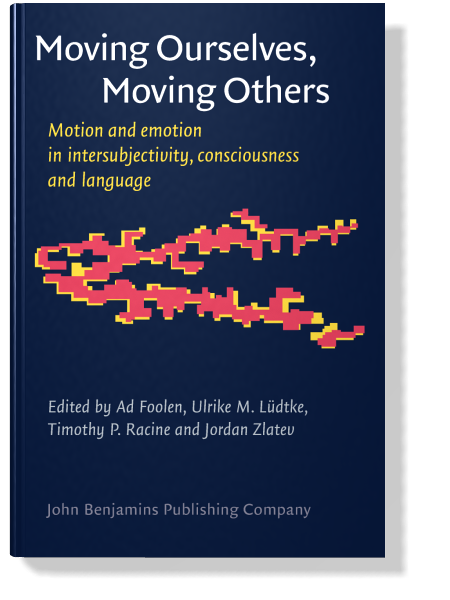
In:Moving Ourselves, Moving Others: Motion and emotion in intersubjectivity, consciousness and language
Edited by Ad Foolen, Ulrike M. Lüdtke, Timothy P. Racine and Jordan Zlatev
[Consciousness & Emotion Book Series 6] 2012
► pp. 105–138
Get fulltext
Emotion regulation through the ages
Available under the Creative Commons Attribution-NonCommercial-NoDerivatives (CC BY-NC-ND) 4.0 license.
For any use beyond this license, please contact the publisher at rights@benjamins.nl.
Published online: 12 April 2012
https://doi.org/10.1075/ceb.6.05sha
https://doi.org/10.1075/ceb.6.05sha
This paper reviews how emotion-regulation has been an archetypal, even a defining theme in the history of Western views about healthy mental functioning. The ancient Greeks bequeathed a constricted view of emotions, however, as ‘wild horses’ that need to be tamed by reason, which led to an equally constricted view of the development of emotion-regulation. In recent years, significant advances have enabled us to move beyond this classical outlook: most importantly, in our understanding of the types of experiences that enhance the development of emotion-regulation; the factors that can impede these experiences; and the reasons why emotion-regulation is so important for a child’s long-term well-being.

Cited by (6)
Cited by six other publications
Protić, Anđela & Jovana Stošić
Rojas-Saffie, Juan Pablo & Nicolás García-Matte
Juntunen, Marja-Leena & Katja Sutela
Brennan, Margaret
Brennan, Margaret
This list is based on CrossRef data as of 15 november 2025. Please note that it may not be complete. Sources presented here have been supplied by the respective publishers. Any errors therein should be reported to them.