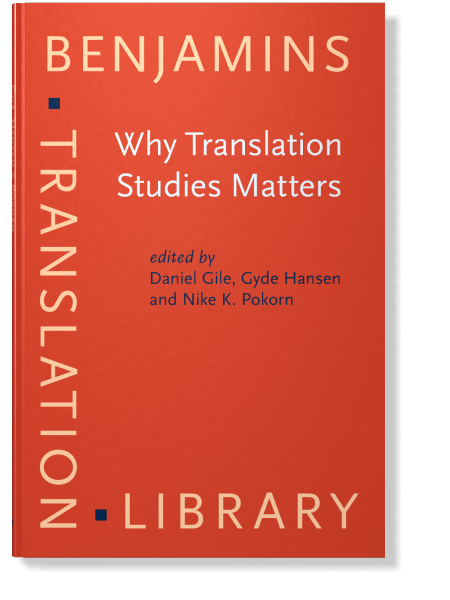
In:Why Translation Studies Matters
Edited by Daniel Gile, Gyde Hansen and Nike K. Pokorn
[Benjamins Translation Library 88] 2010
► pp. 105–114
Slowakisch: Brückensprache zur slawischen Welt?
Möglichkeiten und Grenzen einer kleinen EU-Sprache
Article language: German
Published online: 25 February 2010
https://doi.org/10.1075/btl.88.10van
https://doi.org/10.1075/btl.88.10van
The paper discusses the significance of diversified multilingualism, for Europeans in general and for translators and interpreters of EU-translation services in particular. Officially, the European Union is multilingual but it has long since been part of “the empire of English” as defined by Snell-Hornby (2006). Translations from the simplified Euro-English into other EU-languages make up for over 60% of the total number of translations, and they generally raise no difficulties, but difficulties may well occur when an EU-commissioner, for example, chooses a proverb in his mother tongue as the slogan for an EU-campaign. How can such translation challenges be approached? Can a translator be expected to have a command of all official EU-languages? A possible solution is offered by the multilingual intercomprehension method EuroCom based on developing good linguistic competence in a bridge language as a means of gaining access to other related languages. For Romance languages, this is French and for Germanic languages it is English. They are are also procedural languages of EU-institutions. With Slavonic languages, the situation is more difficult and the ensuing problems are presented and discussed in the paper.

Cited by (1)
Cited by one other publication
This list is based on CrossRef data as of 4 december 2025. Please note that it may not be complete. Sources presented here have been supplied by the respective publishers. Any errors therein should be reported to them.