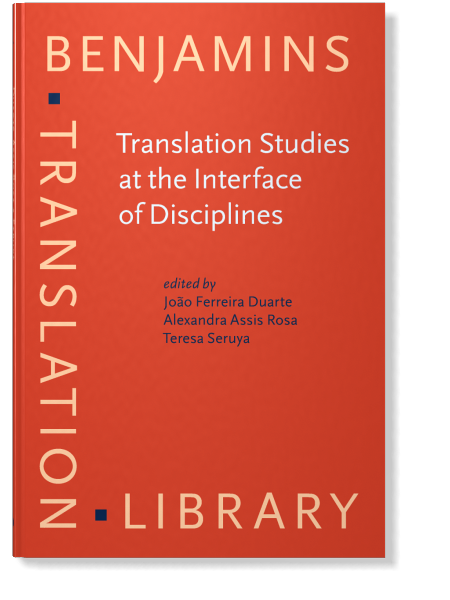
In:Translation Studies at the Interface of Disciplines
Edited by João Ferreira Duarte, Alexandra Assis Rosa and Teresa Seruya
[Benjamins Translation Library 68] 2006
► pp. 129–144
The ideological turn in translation studies
Published online: 25 October 2006
https://doi.org/10.1075/btl.68.12leu
https://doi.org/10.1075/btl.68.12leu
This paper investigates the benefits of taking an ideological turn in translation studies after the linguistic turn and cultural turn in the previous decades. This ideological turn refers to a new/renewed focus on the ideological significance of the act of translation; more specifically, it refers to a changed perspective of seeing translation as a means of ideological resistance. Critical discourse analysis is equally engaged in exposing that discursive practices could have ideological effects. A translator, as a mediator between languages, cultures and ideologies, should make the readers aware of this feature of discourse. This has the advantage of allowing the readers to come to the ideology in their own terms, and not be forcefully interpreted for them by the translator.

Cited by (6)
Cited by six other publications
Shang, Wenbo
Martín Ruano, Maria Rosario
Wang, Dingkun
Baumgarten, Stefan & Jordi Cornellà-Detrell
Rojas-Lizana, Isolda & Emily Hannah
2013. Manipulación del género gramatical y sexual en la traducción española de un cuento de Oscar Wilde. Babel. Revue internationale de la traduction / International Journal of Translation 59:3 ► pp. 310 ff.
This list is based on CrossRef data as of 4 december 2025. Please note that it may not be complete. Sources presented here have been supplied by the respective publishers. Any errors therein should be reported to them.