In:Non-professional Interpreting and Translation: State of the art and future of an emerging field of research
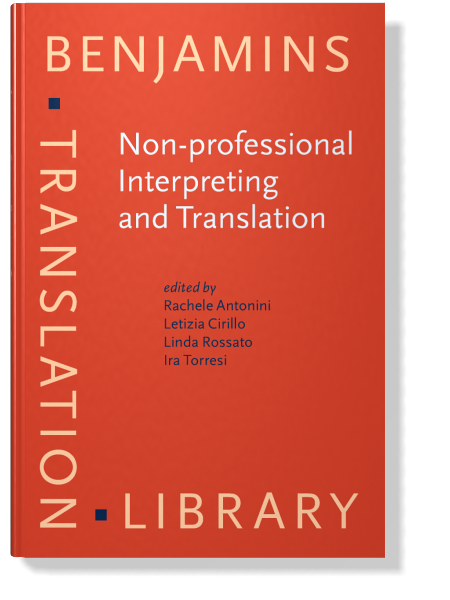
Edited by Rachele Antonini, Letizia Cirillo, Linda Rossato and Ira Torresi
[Benjamins Translation Library 129] 2017
► pp. 157–175
Chapter 8From confinement to community service
Migrant inmates mediating between languages and cultures
Published online: 19 June 2017
https://doi.org/10.1075/btl.129.08ros
https://doi.org/10.1075/btl.129.08ros
Abstract
This paper presents a spin-off study from the research project In MedIO PUER(I), launched at the University of Bologna in 2007 (see Antonini 2010a; Antonini 2010b; Cirillo et al. 2010; Bucaria & Rossato 2010; Antonini this volume), and sets out to investigate the under-researched phenomenon of language and cultural brokering among migrant inmates. In countries such as Italy, where immigration is still a recent experience and resources for institutional interpreting are scarce even in ordinary public contexts, professional language services are virtually non-existent in secluded environments such as prisons. Foreign inmates and jail personnel face linguistic problems that they tend to handle through spontaneous forms of mediation: a convicted migrant, who is fluent in Italian, may act as a mediator between fellow-country inmates with poor knowledge of the host language and jail officers. This form of language and cultural brokering is a common form of ad hoc interpreting that responds to the communication needs of both inmates and detention institutions. This paper sets out to map the phenomenon and to investigate whether this practice has an impact on inmates’ self-perception and rehabilitation process.
Keywords: migrant inmates,
ad hoc interpreting, identity, rehabilitation, integration
Article outline
- 1.Introduction
- 2.Review of the literature
- 3.Appalling conditions of inmates in Italian prisons
- 3.1Crime perception in Italy
- 3.2Language and cultural mediation in detention centers: A European issue
- 4.Study objectives and methodology
- 4.1Research design
- 4.2The survey
- 4.3The respondents
- 5.Discussion
- 5.1Frequency of occurrence of language brokering practice
- 5.2Attitudes and feelings towards the language brokering practice
- 5.3Translation strategies and awareness of the mediator’s role
- 5.4Identity issues
- 6.Conclusions
Notes References

References (33)
Aebi Marcelo F. & Natalia Delgrande. 2012. Council of Europe Annual Penal Statistics: Space I-2012. [URL] (last viewed April 7, 2015).
Antonini, Rachele ed. 2010a. Child Language Brokering: Trends and Patterns in Current Research (= mediAzioni 10). [URL] (last viewed March 25, 2015).
. 2010b. “The Study of Child Language Brokering: Past, Current and Emerging Research”. mediAzioni 10. 1–23.
Baixauli-Olmos, Lluís. 2012. “La interpretació al serveis públics des d’una perspectiva ética: La deontologia professional i l’apicació al context penitenciari”. PhD dissertation, Universitat Jaume I.
. 2013. “A Description of Interpreting in Prisons: Mapping the Setting through an Ethical Lens”. Interpreting in a Changing Landscape. Selected Papers from Critical Link. 6 ed. by Christina Schäffner, Krzysztof Kredens & Yvonne Fowler. 45–60. Amsterdam & Philadelphia: John Benjamins.
. 2013. “Reconstructing Moral Identities in Memories of Childhood Language Brokering Experiences”. International Migration 51:5. 205–218.
Benucci, Antonella. 2007. “Insegnare italiano L2 in carcere”. Insegnare italiano come lingua seconda in carcere e nei CTP ed. by Gaetana Rossi & Cosimo Scaglioso, 53–73. Firenze: IRRE Toscana.
Bucaria, Chiara & Linda Rossato. 2010. “Former Child Language Brokers: Preliminary Observations on Practice, Attitudes and Relational Aspects”. mediAzioni 10, 239–268.
Caritas-Migrantes. 2010. Immigrazione: dossier statistico 2010-XX rapporto: per una cultura dell’altro. Rome: Idos.
2014b. XXIII Rapporto immigrazione 2013: tra crisi e diritti umani. Sintesi Perugia: Tau Editrice. [URL] (last viewed April 7, 2015).
Carmignani, Serena. 2012. “Carcere e formazione: analisi critica dei progetti per formazione di detenuti in carcere in italia”. Educazione Linguistica Language Education. 1:2. 379–401.
Cirillo Letizia, Ira Torresi & Cristina Valentini 2010. “Institutional Perceptions of Child Language Brokering in Emilia Romagna” mediAzioni 10. 269–296.
Hall, Nigel. 2004. “The Child in the Middle: Agency and Diplomacy in Language Brokering Events”. Claims, Changes and Challenges in Translation Studies ed. by Gyde Hansen, Kirsten Malmkjaer & Daniel Gile, 285–297. Amsterdam & Philadelphia: John Benjamins.
Hall, Nigel & Sylvia Sham. 2007. “Language Brokering as Young People’s Work: Evidence from Chinese Adolescents in England”. Language and Education 21:1. 16–30.
Harris, Brian & Bianca Sherwood. 1978. “Translating as an Innate Skill”. Language Interpretation and Communication. New York: Plenum.
Jesuit Refugee Service-Europe. 2010. Becoming Vulnerable in Detention. [URL] (last viewed April 22, 2014).
Martìnez-Gòmez Gòmez, Aída. 2011. “La interpretación en instituciones penitenciarias. La relevancia del componente interpersonal en la calidad de la actuación de intérpretes naturales”. PhD dissertation, Universitat d’Alacant.
Orellana, Marjorie F. 2001. “The Work Kids Do: Mexican and Central American Migrant Children’s Contributions to Households and Schools in California”. Harvard Educational Review 71:3. 366–389.
2009. Translating Childhoods: Immigrant Youth, Language and Culture. New Brunswick: Rutgers University Press.
Orellana, Marjorie F., Lisa M. Dorner & Lucila Pulido. 2003. “Accessing Assets: Immigrant Youth’s Work as Family Translators or Para-phrasers”. Social Problems 50:4. 505–524.
Osservatorio Europeo sulla Sicurezza 2012. L’Insicurezza sociale ed economica in europa: significati, immagine e realtà. Rapporto annuale 2012. [URL] (last viewed April 8, 2015).
Polchi, Vladimiro. 2010. “L’Italia e la criminalità mediatica. Più si guardano i Tg, più cresce la paura”. La Repubblica 14 gennaio 2010: 15. [URL] (last viewed April 7, 2015).
Tranchese, Alessia. 2008. “Perché la bestia è sempre l'altro: rappresentazioni di perpetratori di stupro nei quotidiani italiani e singaporiani”. MA dissertation, SSLMIT of the University of Bologna.
Valdés, Guadalupe. 2002. Understanding the Special Giftedness of Young Interpreters. Storr (CT): National Research Center on the Gifted and Talented. [URL] (last viewed April 22, 2014).
Cited by (2)
Cited by two other publications
Nikolajová Kupferschmidtová, Elena
This list is based on CrossRef data as of 15 november 2025. Please note that it may not be complete. Sources presented here have been supplied by the respective publishers. Any errors therein should be reported to them.